
You Don’t Need Better Light—You Need Better Vision
Most photographers wait for better light. Better skies. Better conditions. I used to do the same—until I realized the problem wasn’t the light in front of me, but the way I was seeing it. Out in the field, we’re taught to chase perfection, yet some of the most powerful images I’ve made came when the light was harsh, flat, or “wrong.” The moment I stopped trying to fix the light and started responding to it, my photography changed—not because the conditions improved, but because my vision did.
This outing is a prime example.
Early one January morning I arrived to an ice covered waterfowl impoundment on the Pocosin Lakes National Wildlife Refuge (PLNWR). The sun was just starting to break the top of the tree line and you could see a small number of tundra swans. Most were are congregated in the small patches were no ice had formed. No clouds to be seen. Most people would immediately start “shooting” from the south side of the impoudment where the light was coming in from the east. You would get a nice glow of light, showing the detail of your subject, detail in the skies and background.
I’m not most people.
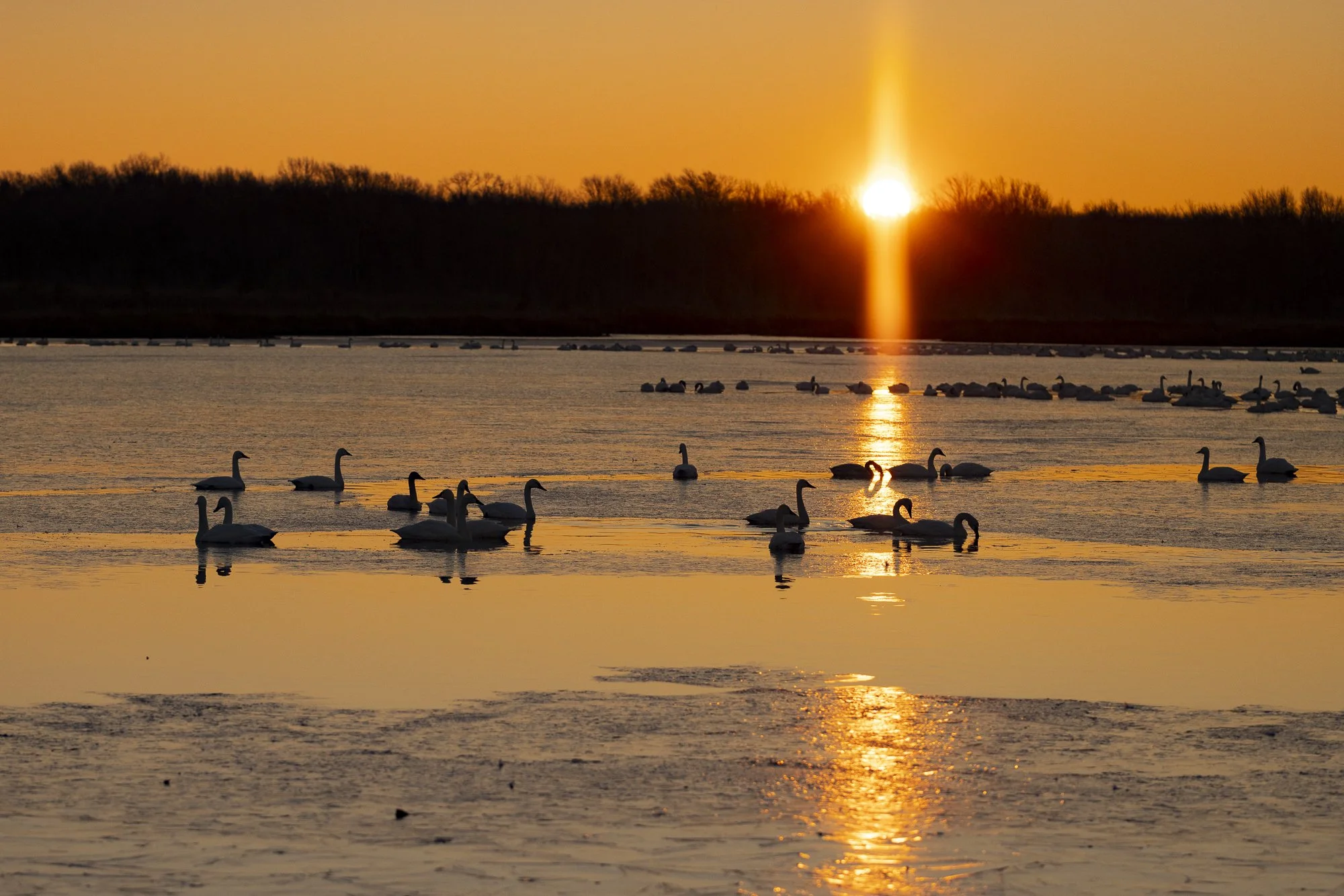
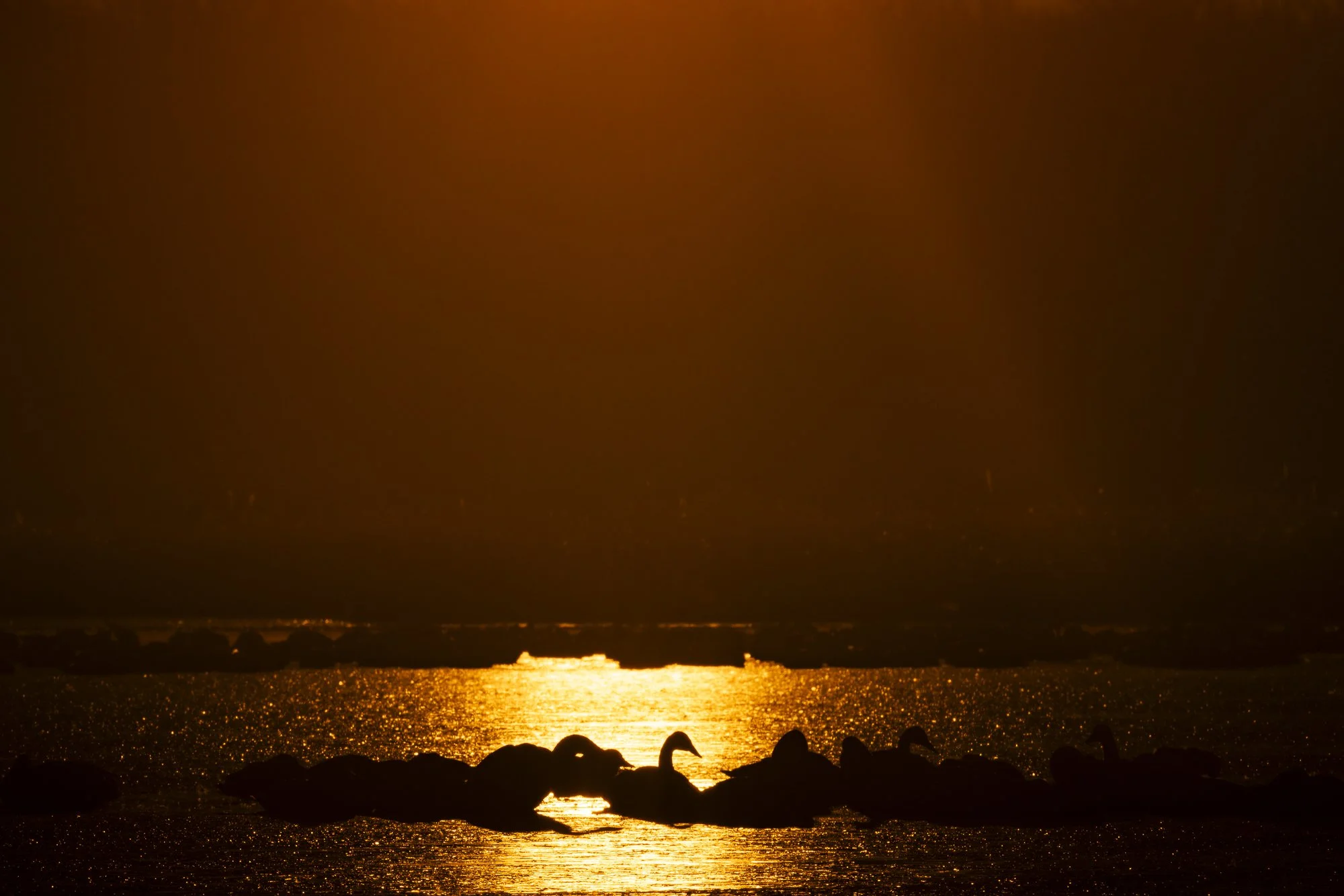
Wide perspective of tundra Swans silhouetted on a frozen impoundment at the Pocosin Lakes NWR.
Photographers often complain about harsh backlight or blown highlights at sunrise/sunset. This scene only works because of that intensity. The moment you stop trying to “fix” the light and start asking what does this light want to be? Everything changes. I live for moments like these!
When I first arrived I photographed the entire seen with a wide angle lens to show off as much of the landscape as possible. I positioned myself to be directly in front of the suns light and reflection in the water. Once I saw how pretty the light was, in the middle of that beam of light, I decided to focus only on that area of the impoundment. I switched to my 600mm lens and began to isolate individual swans. The light reflecting off the ice & waters surface was extremely bright. So extreme I had to drastically change my settings so I could capture the detail on the ice without blowing the highlights. So here’s what I had to do.
I sped up my shutter speed to 1/8000th of second to restrict the amount of light coming in. There was so much light coming in still, that it wasn’t getting me to the silhouettes that I was wanting. So I then stopped down the aperture to f/16 & even as small as f/25 to create the photographs I was looking for. My exposure was negative 4 stops underexposed. Now, I was finally capturing the scene that I had envisioned in my mind.
After finding the right exposure I had to be patient, waiting for the swans swim in the right spot and lift their heads so the viewer could easily tell what the subject was. Below are hand full of images that I created using this style of photography.
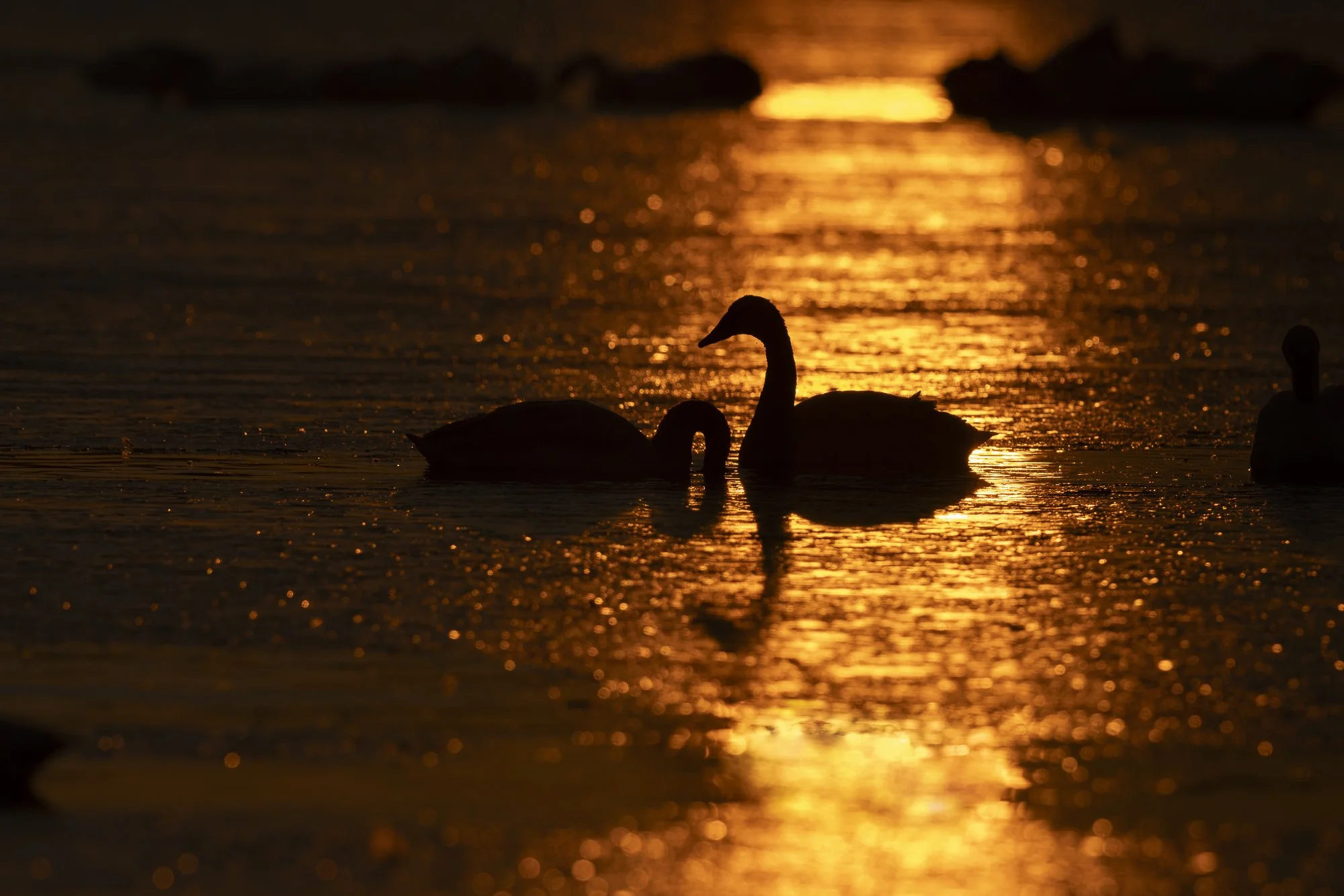
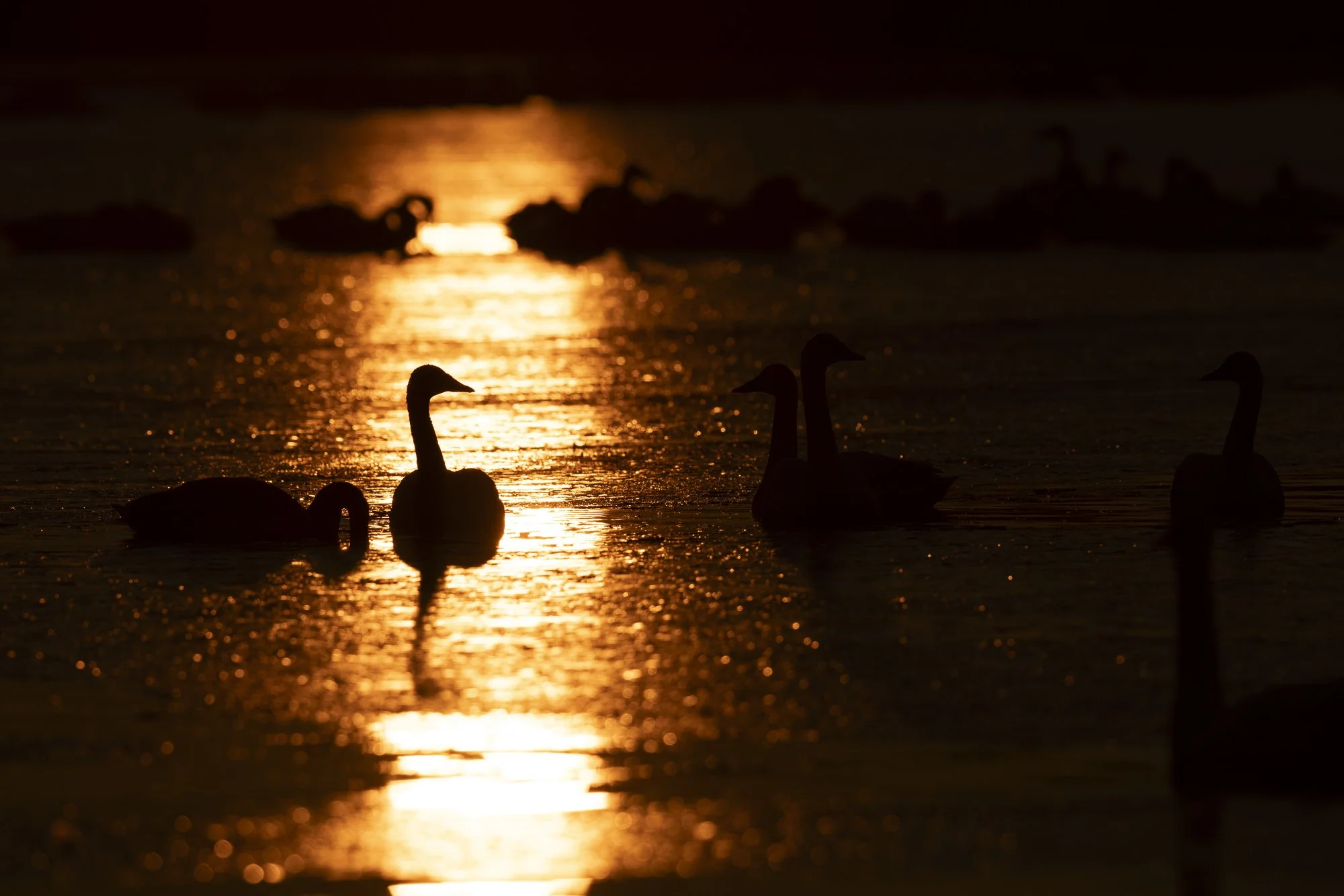
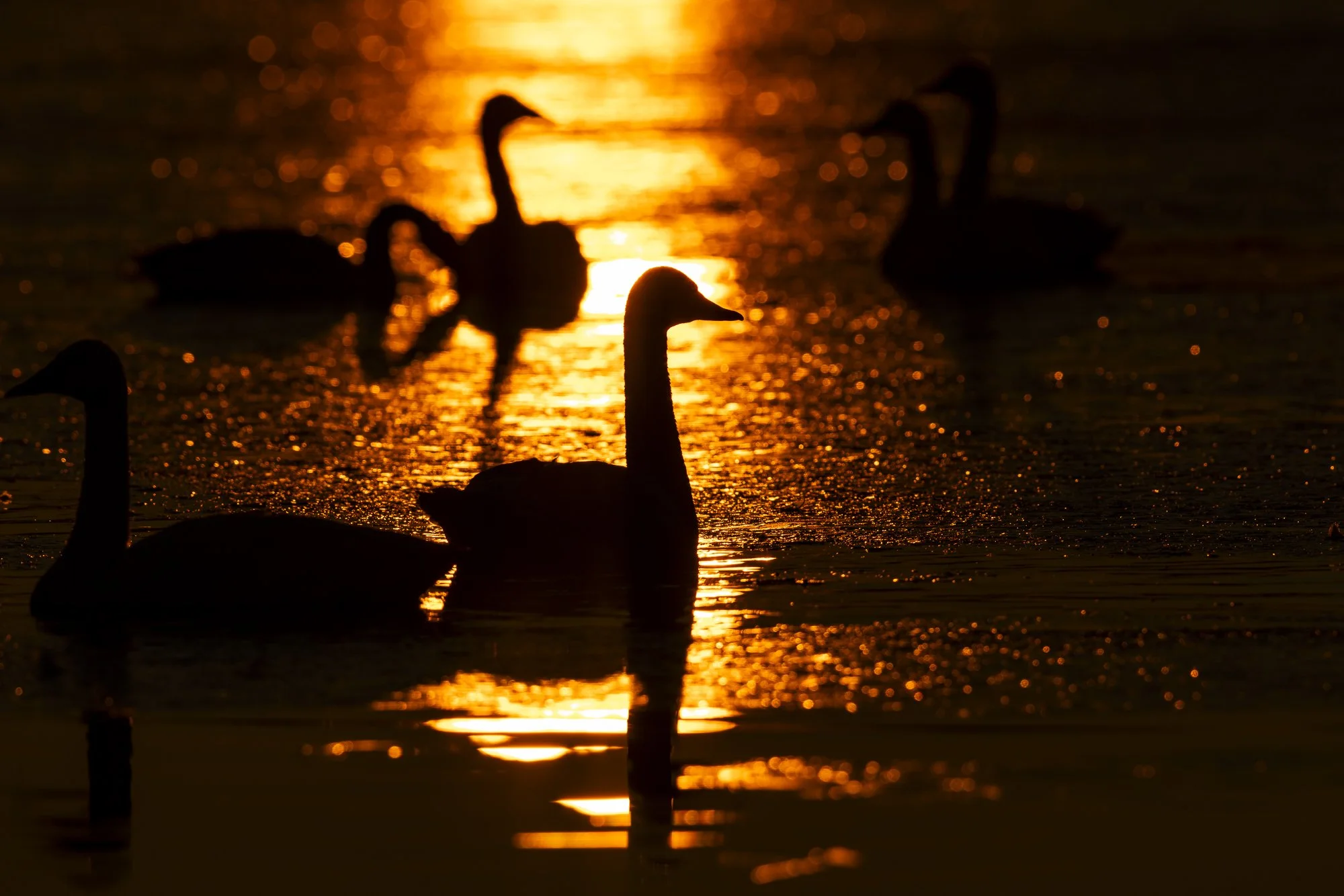
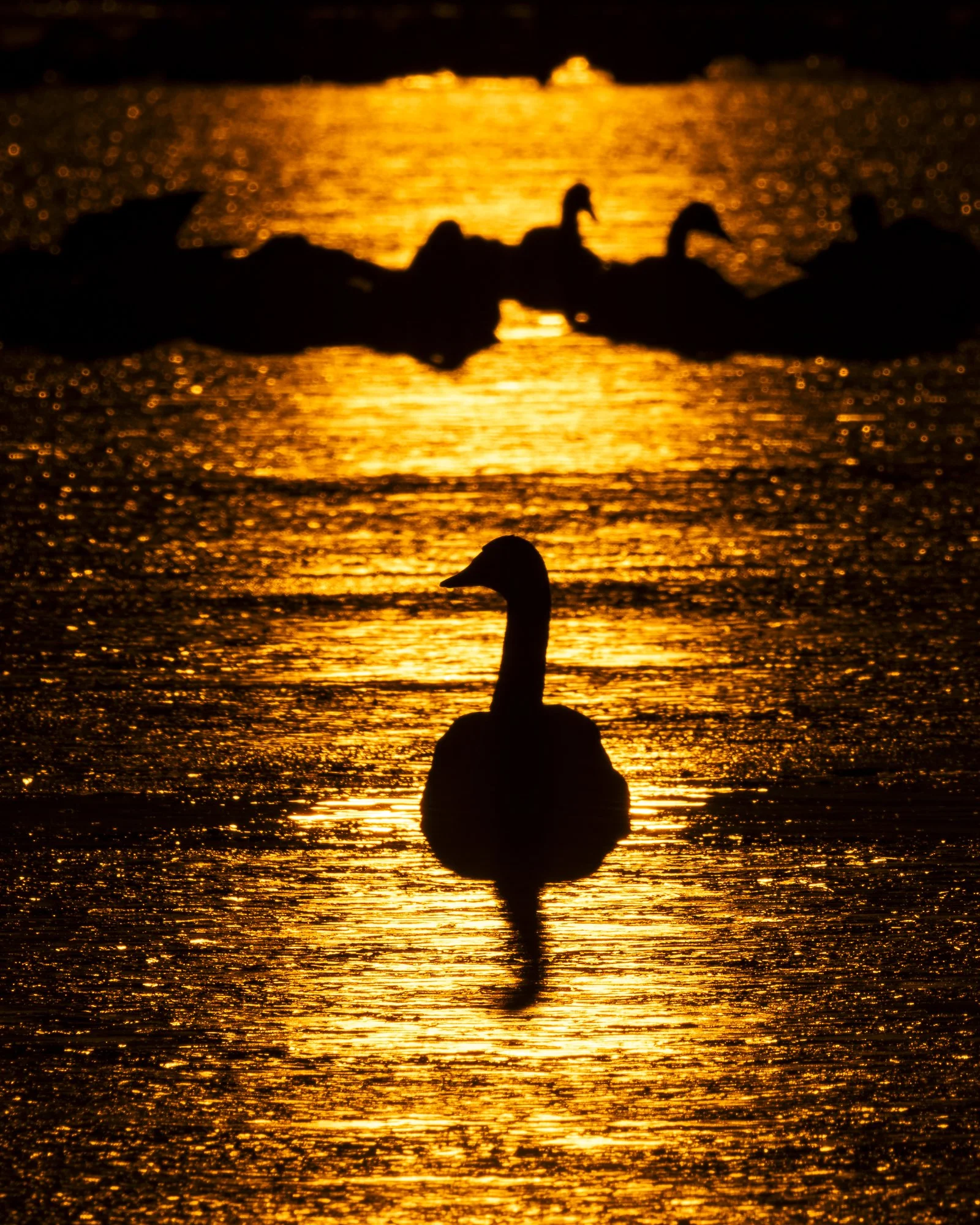
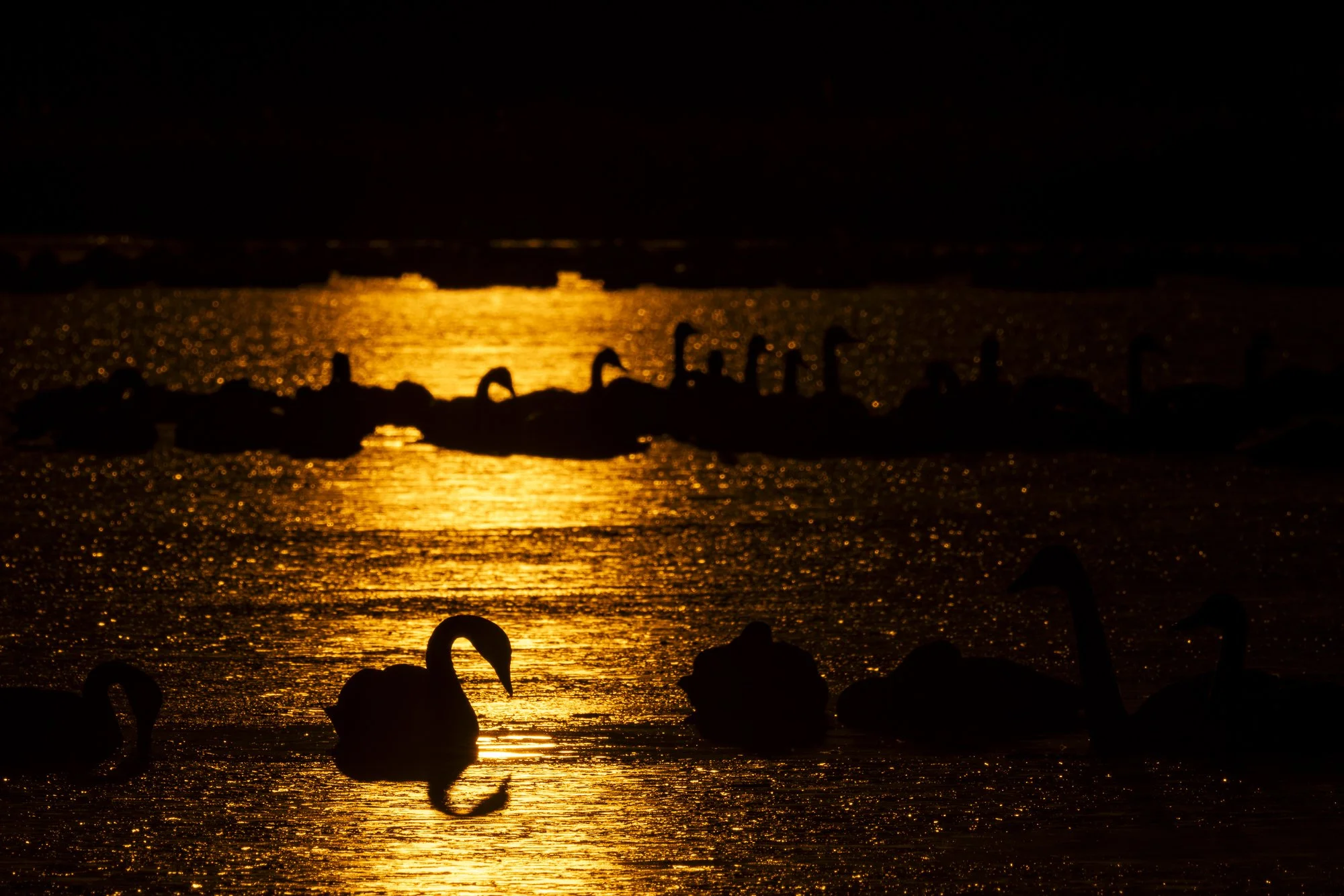
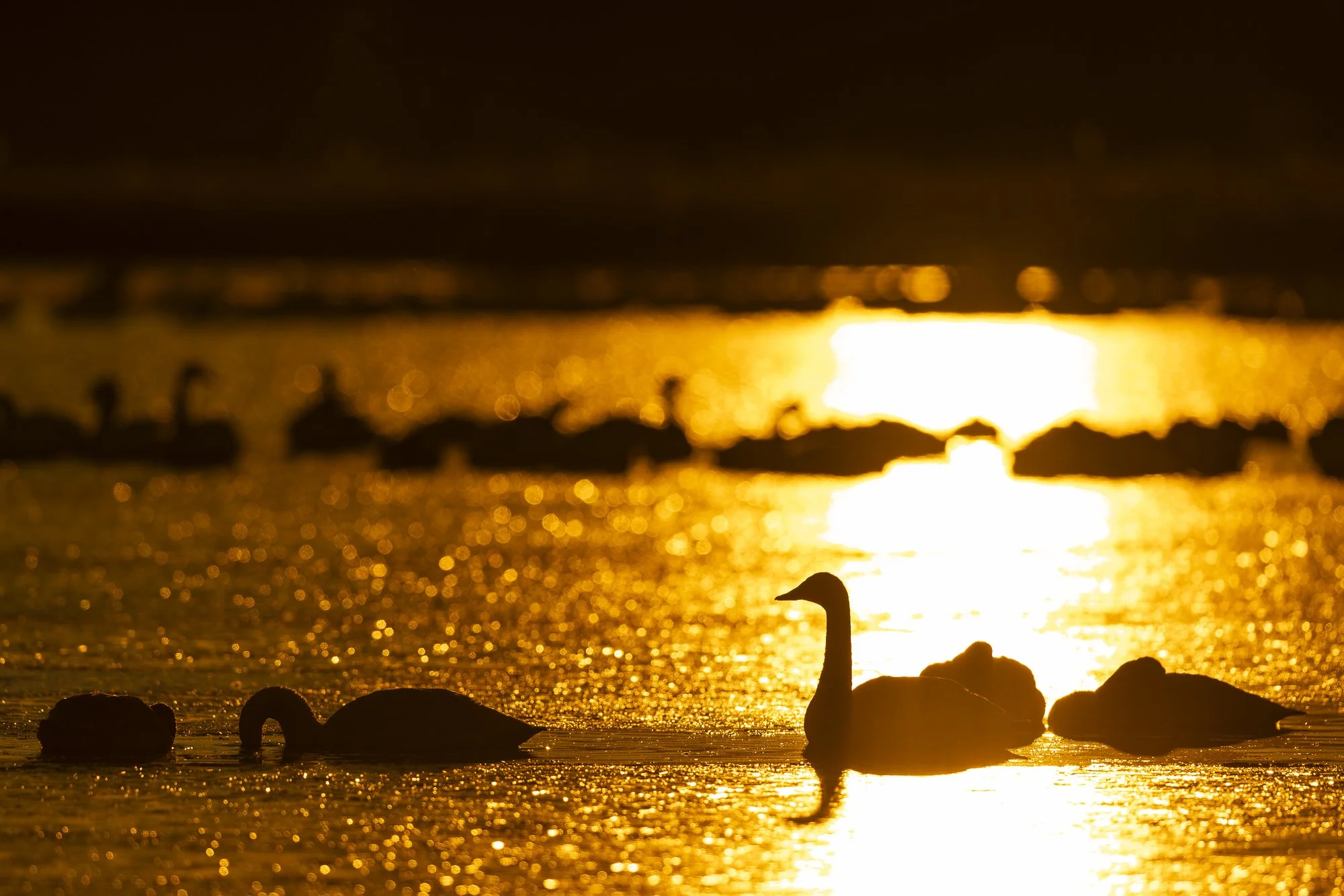
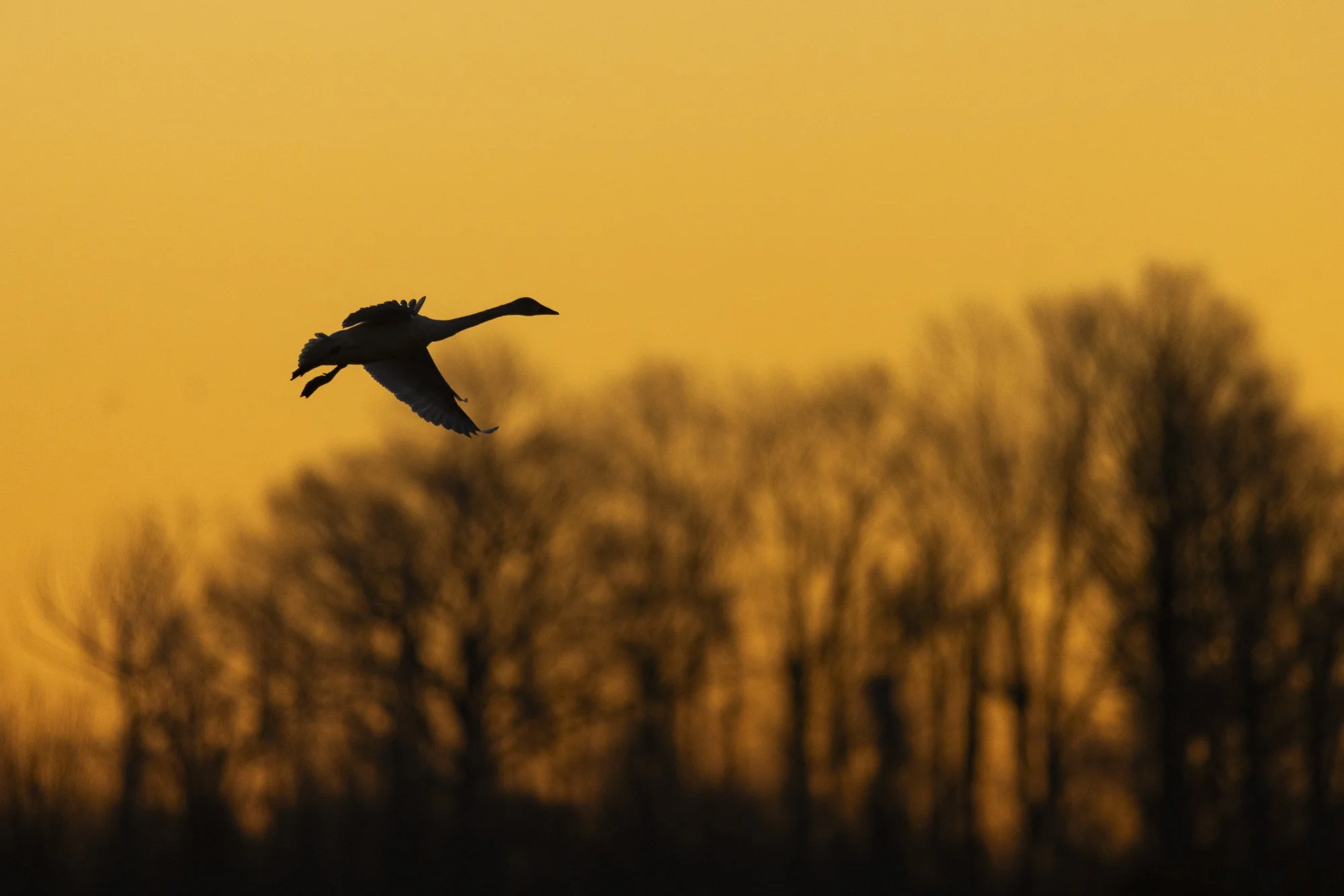
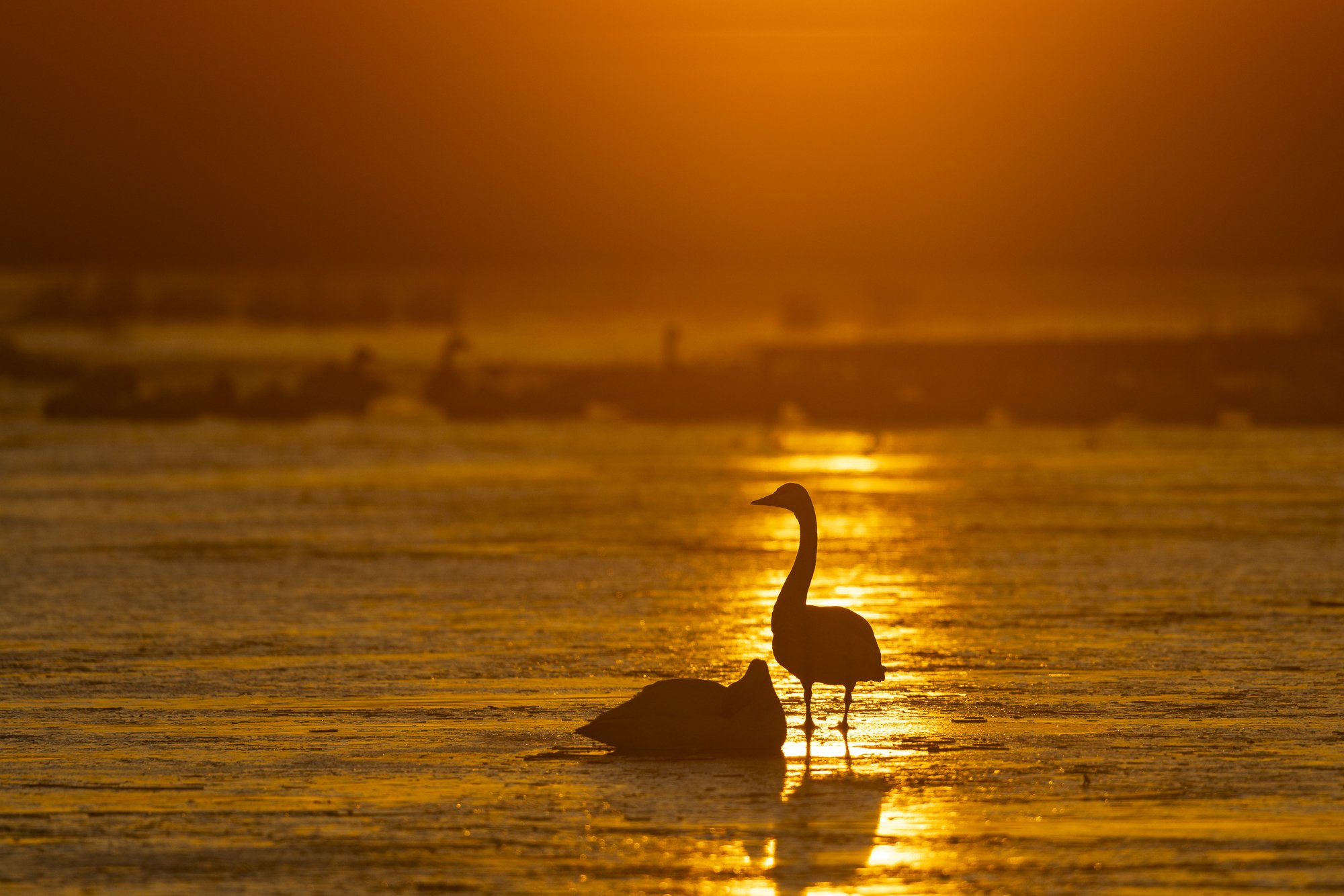
In the photos above, the swans aren’t about details in the feathers or eye sharpness—they’re about form. Silhouettes force you to see animals as graphic shapes first, with your eye being directed to the darkest & lightest part of the frame. Light defines the edges. Instead of just “there are swans on the water,” the real subject here is the light reflecting across a surface. The glowing water creates mood, depth, and direction all on its own. Strong environmental light can replace dramatic skies or perfect action. Sometimes the background is the story.
As the sun lift higher and higher I changed my shooting style to match the light I was given. The suns light was spilling over the top the trees and into the impoundment. Creating a glow of light filling the frame from left to right and top to bottom. Here I concentrated on the photographing swans in flight. I loved the sun’s rays but I also loved the backlit glow of the swans wings as they flew across the scene. You could under expose a couple of stops to make the background go completely dark, or like below, you exaggerate the suns glow to tell show off those beautiful sunrise colors.
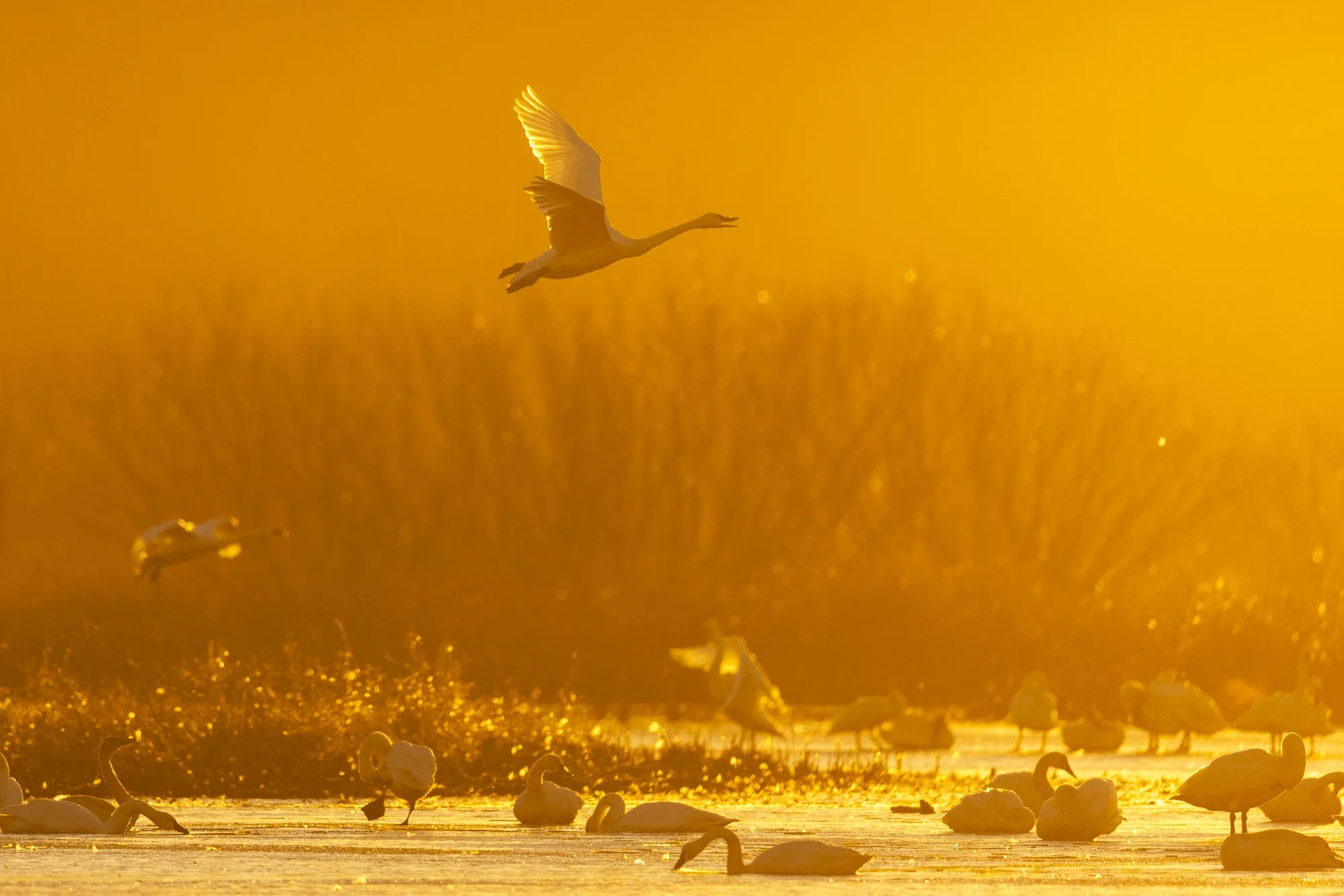
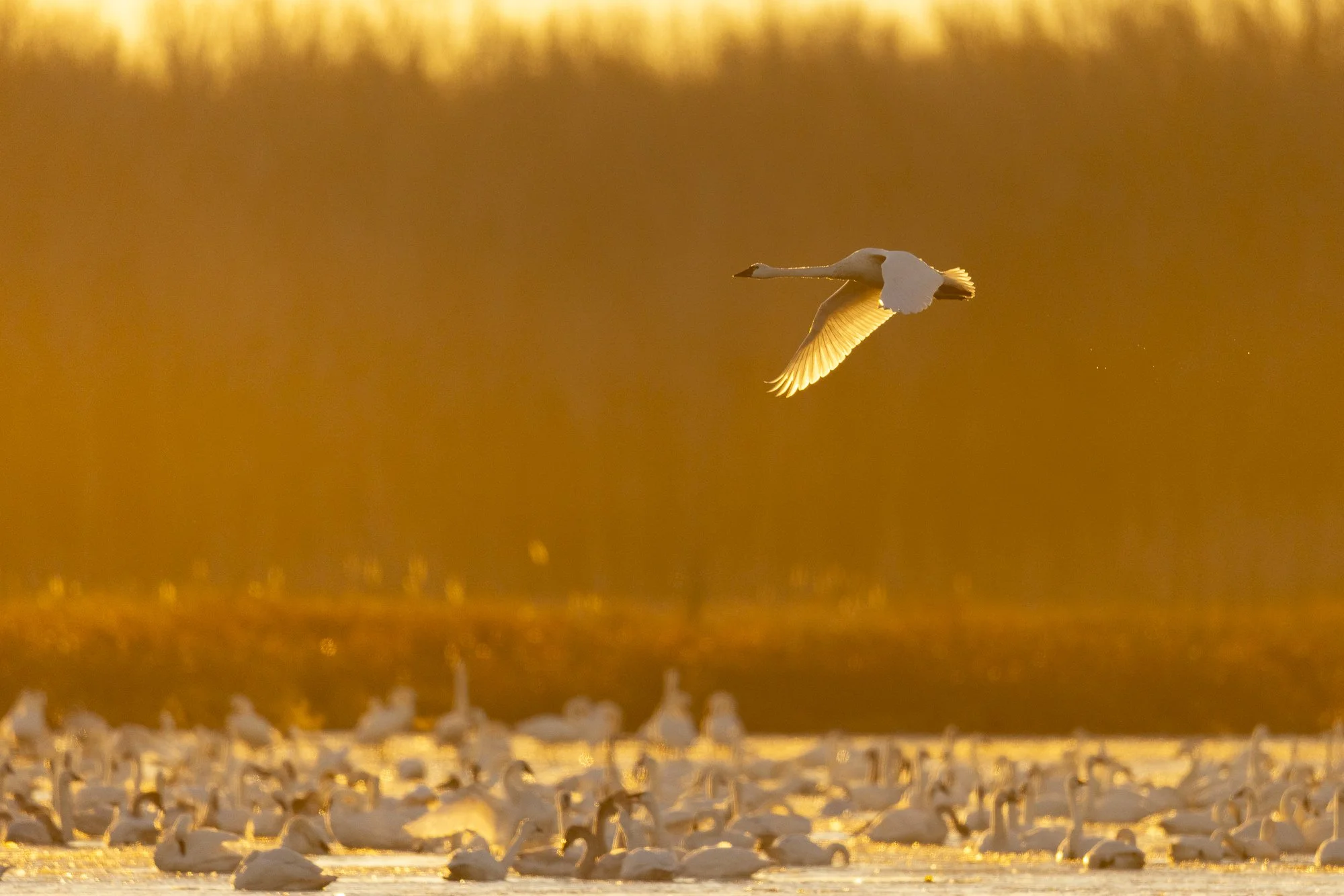
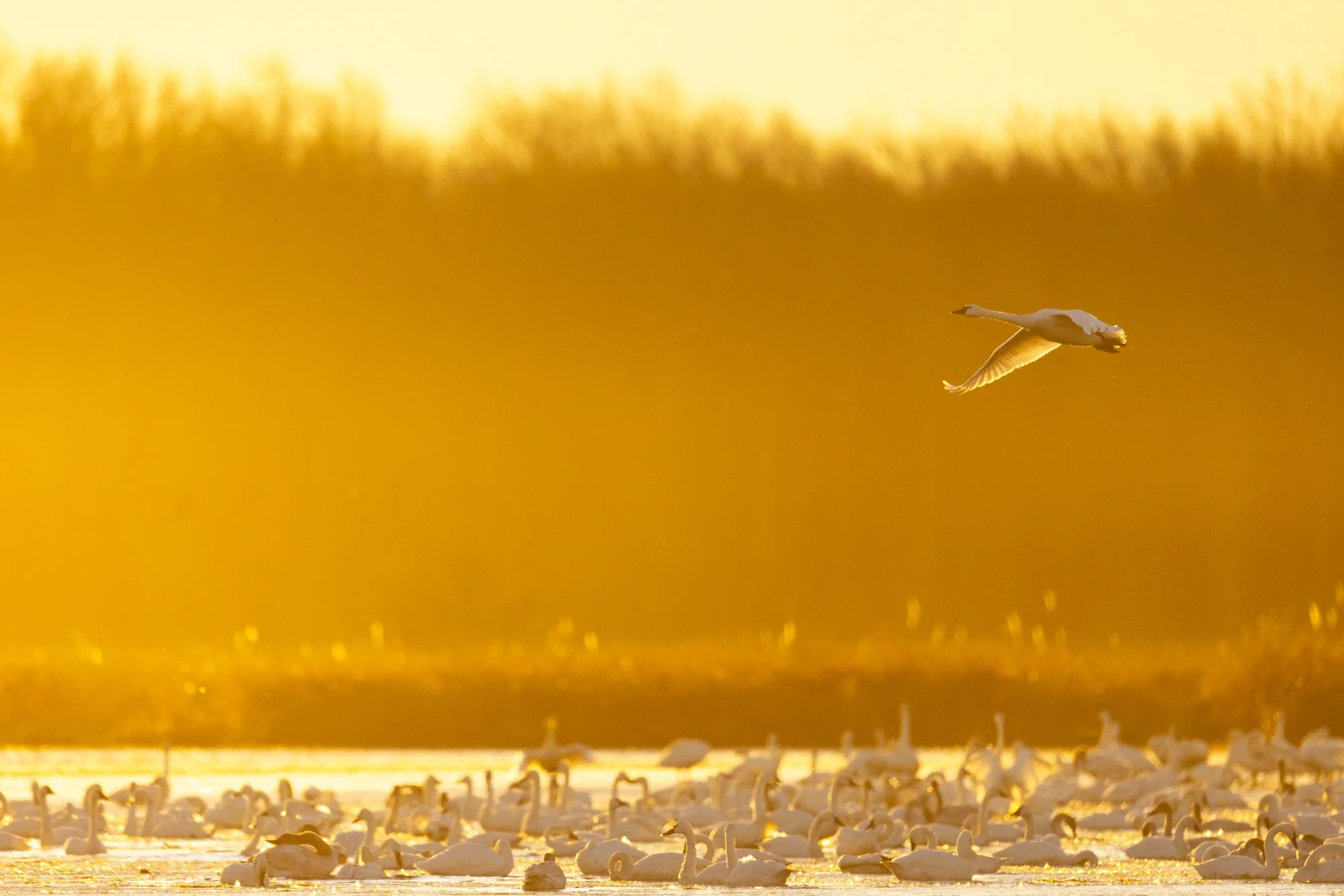
After a few minutes the light began to change again, the angle of the light was now coming from a more higher position. Making the tundra swans pop from against the background. All of these images were created on the same morning just minutes a part. There was a group of photographers on the south side of the impoundment all morning and they never moved. I’m willing to be all of their images were lit the exact same way from when they arrived to when they left. Not that there is anything wrong with that style of photography. However if you want if you really want to set yourself apart from everyone else, you need to start thinking differently.
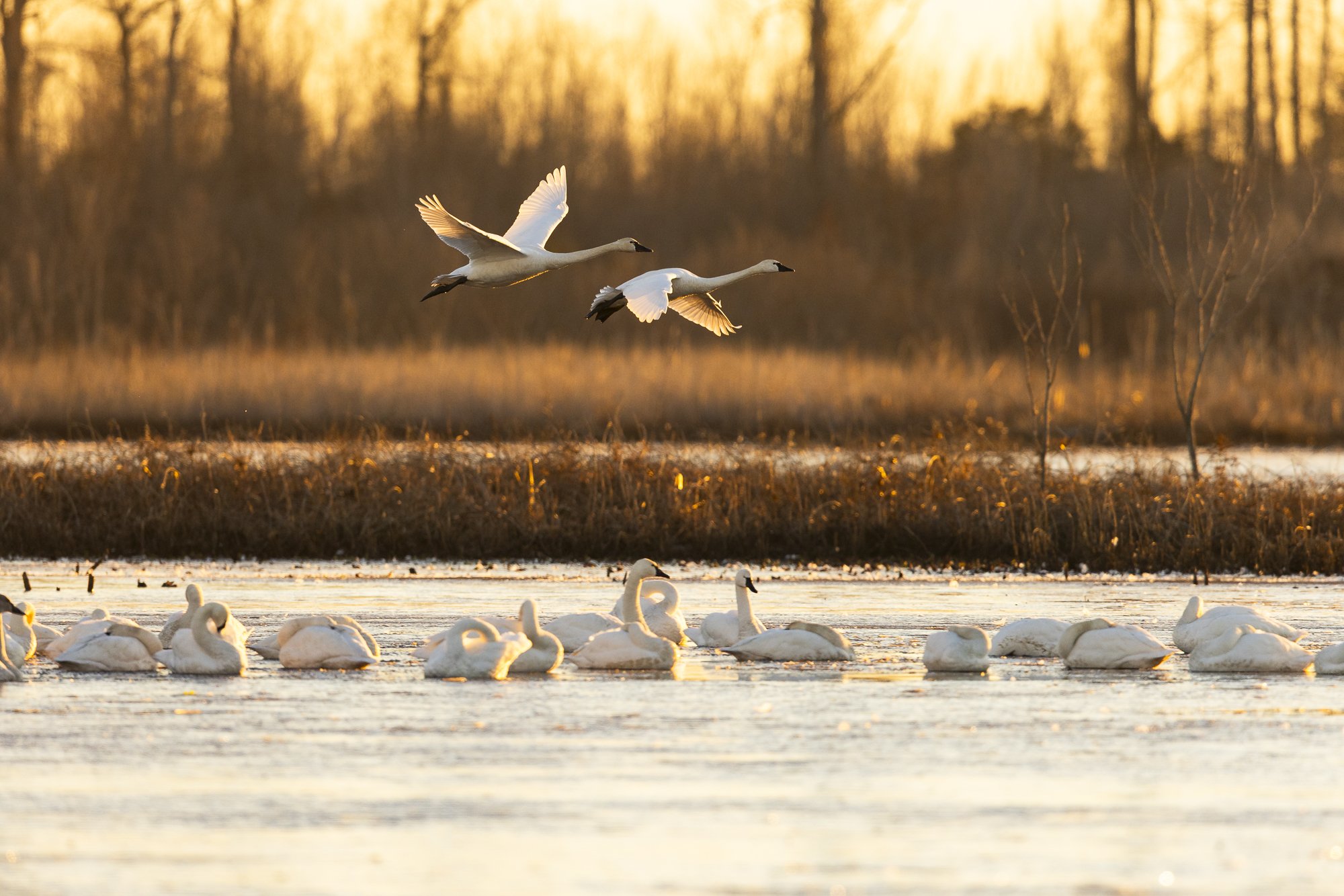
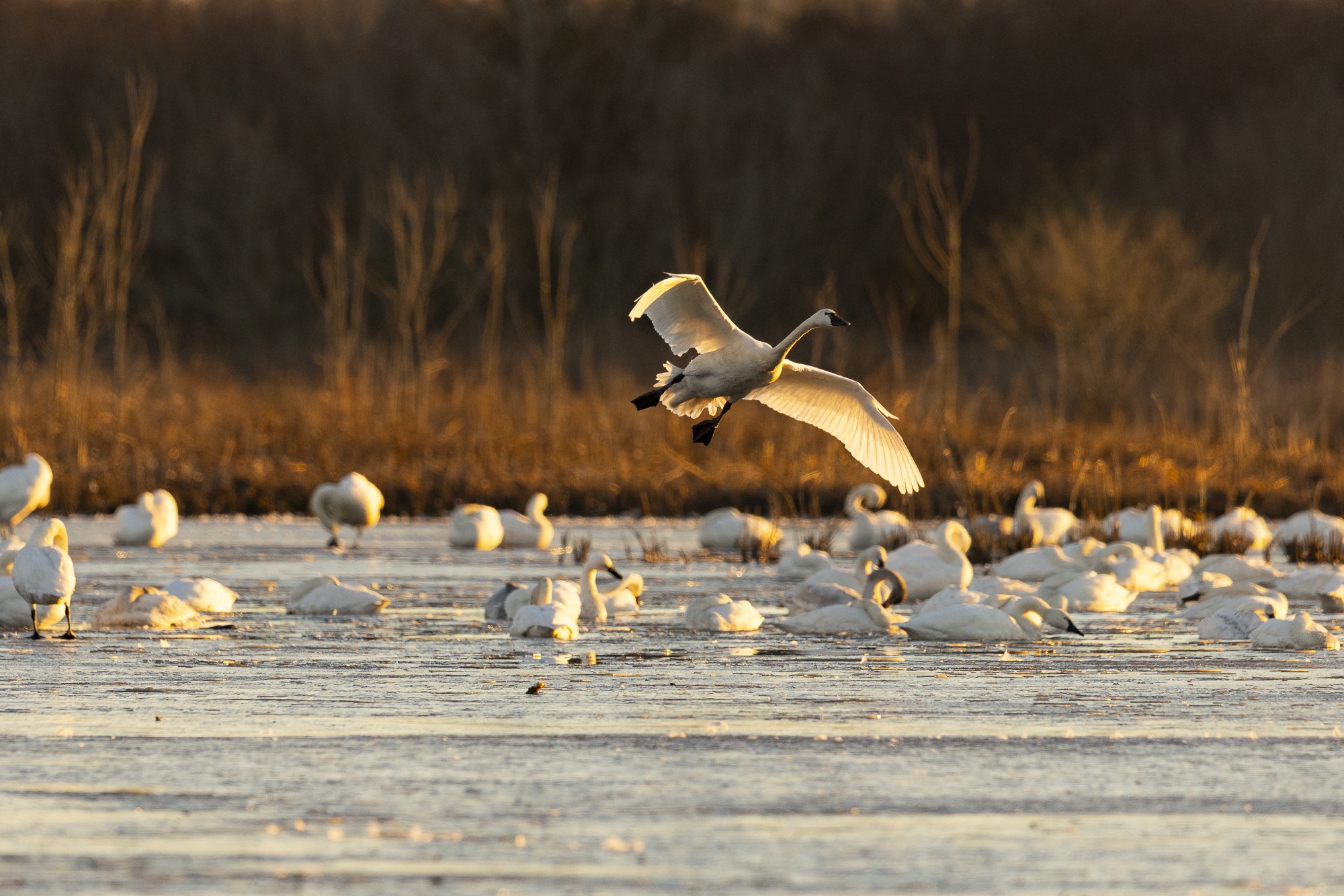
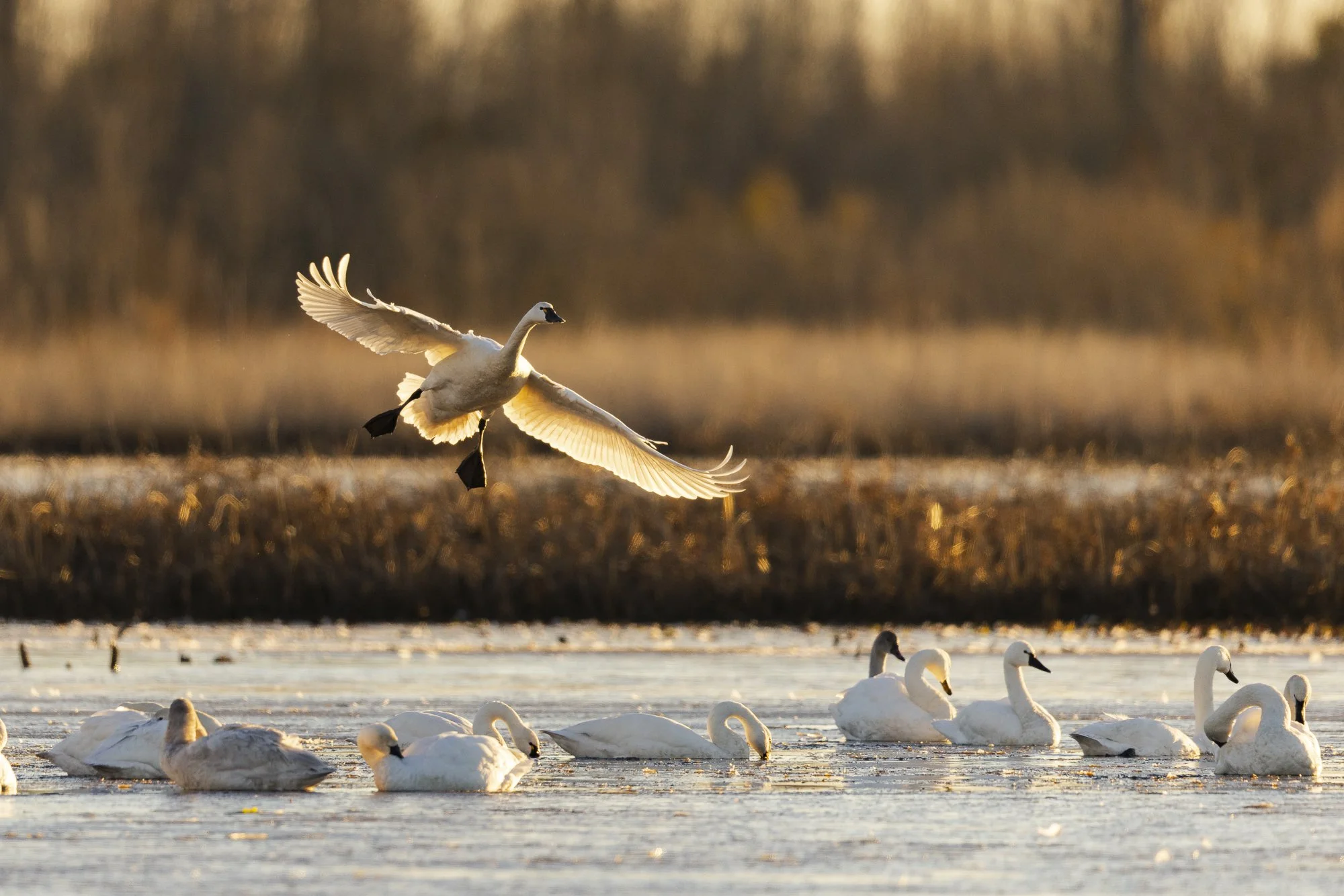
The next time you’re in the field and the light isn’t what you hoped for, pause before you walk away. Look at the shadows. Watch how highlights move. Pay attention to what the light is revealing instead of what it’s hiding. You don’t need perfect conditions to make meaningful images—you need presence, patience, and the willingness to see differently. The light you’re given is already telling a story. The only question is whether you’re ready to listen and start creating images with the light your given.
Want to learn more about exploring & crafting the light you are given? Join me on a private workshop here.
If you’ve enjoyed this post and want to see more like it, please leave me a comment below. Also share this page with your photography friends.
Cheers!
Neil