
Black & White Photography
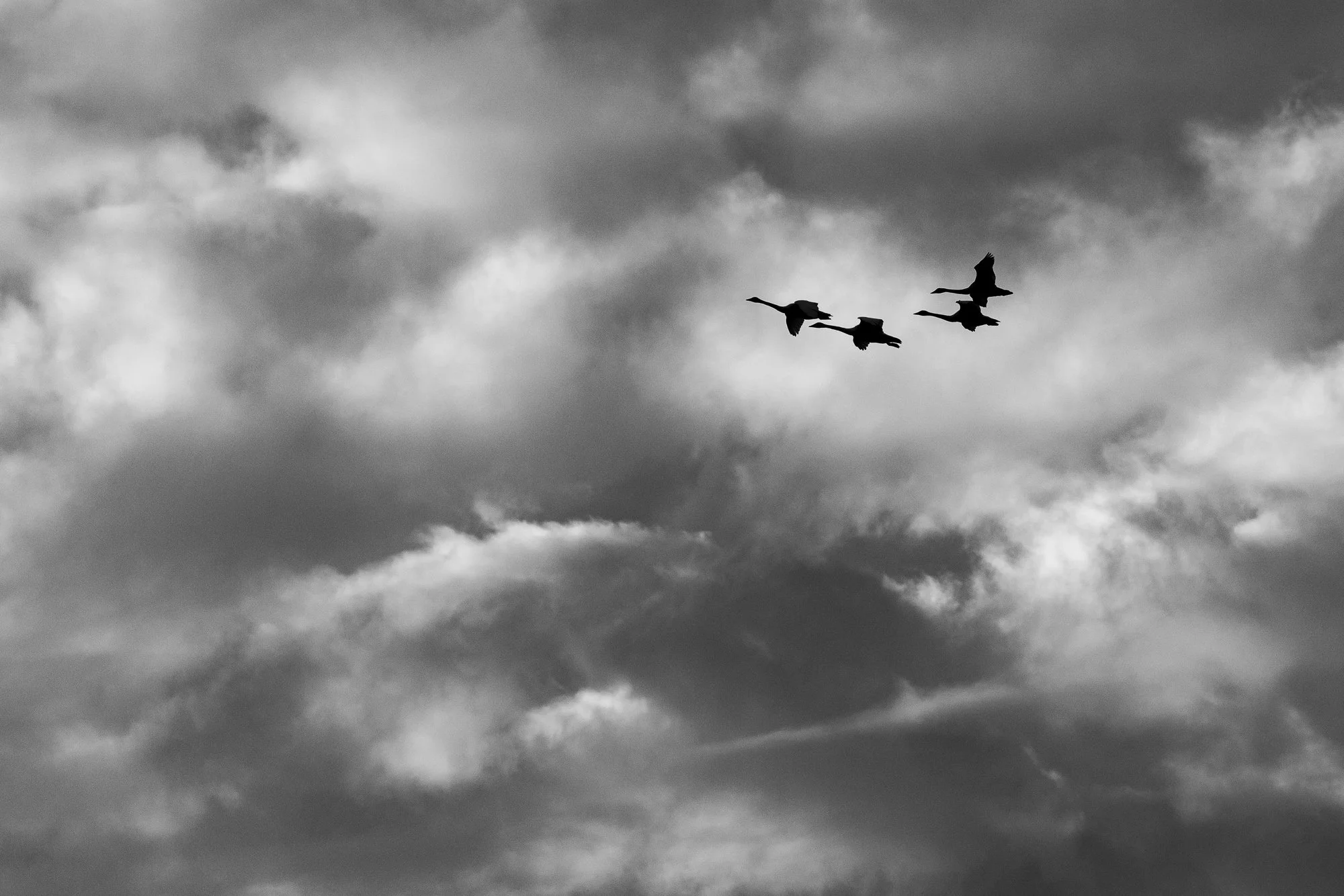
Black & white photography strips an image down to its essentials. Without the distraction of color, the light, shapes, texture, and contrast do all the heavy lifting. When the subject is a white bird like swans and snow geese that simplicity becomes both the challenge and the reward.
White birds demand intention.
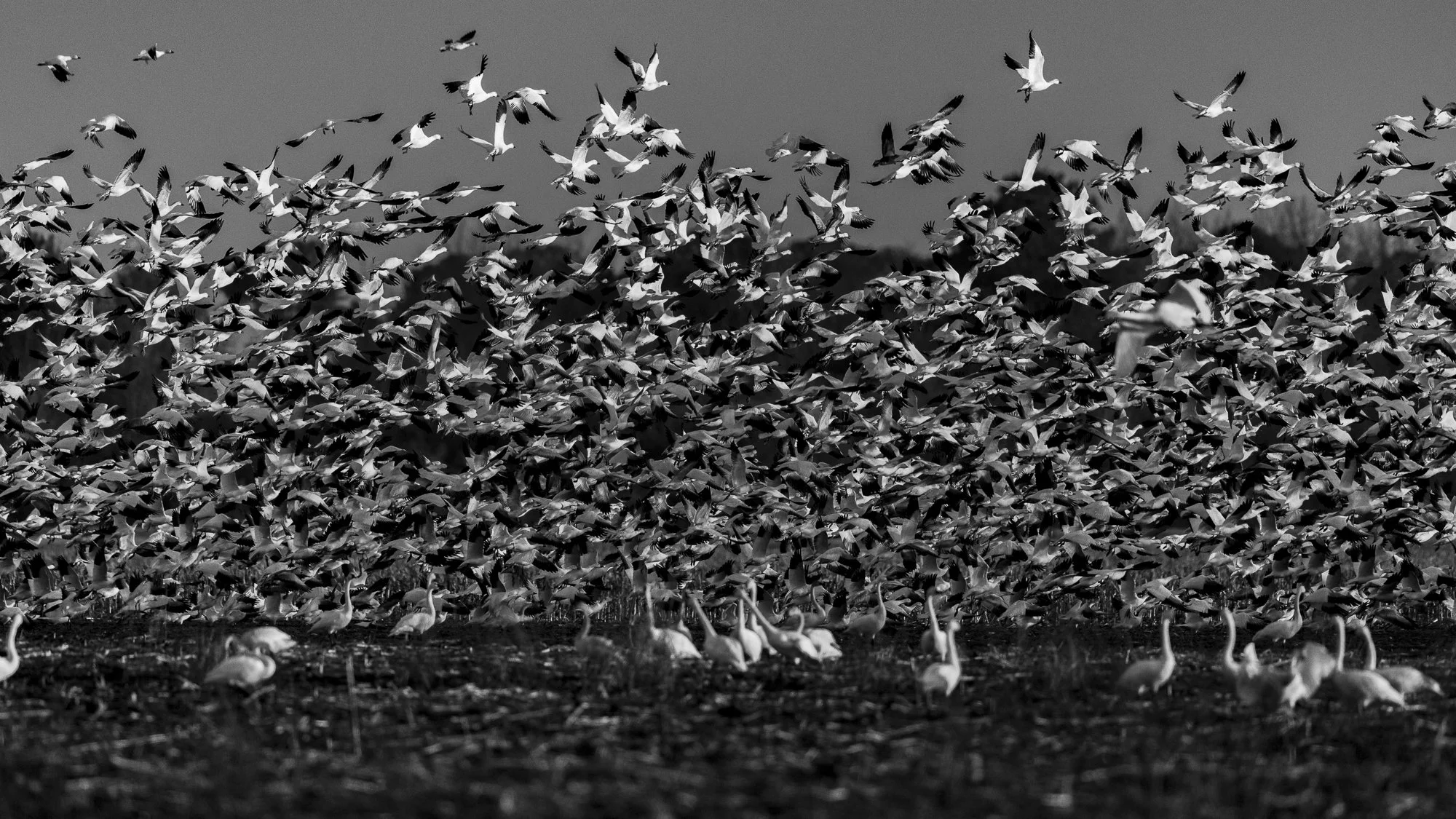
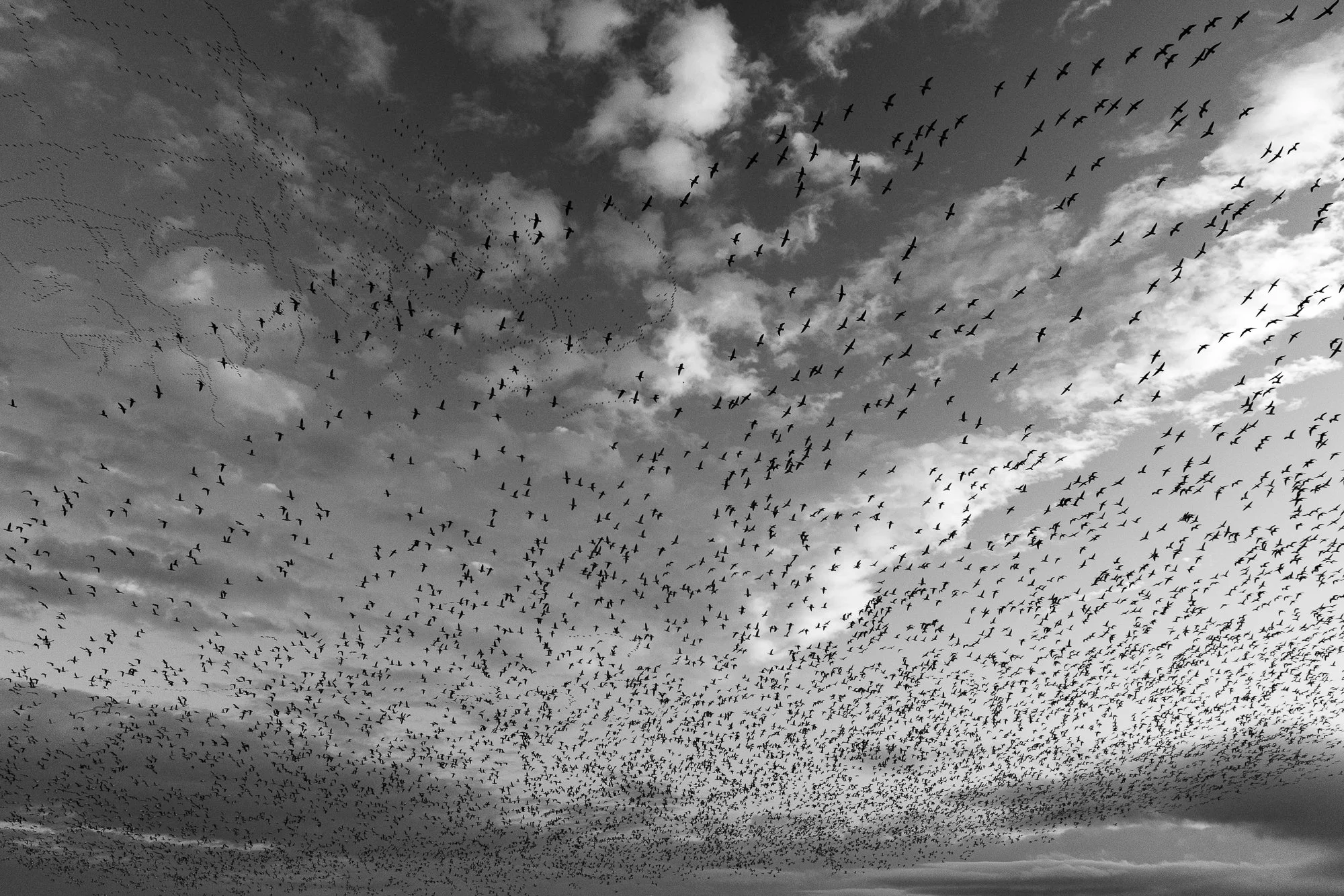
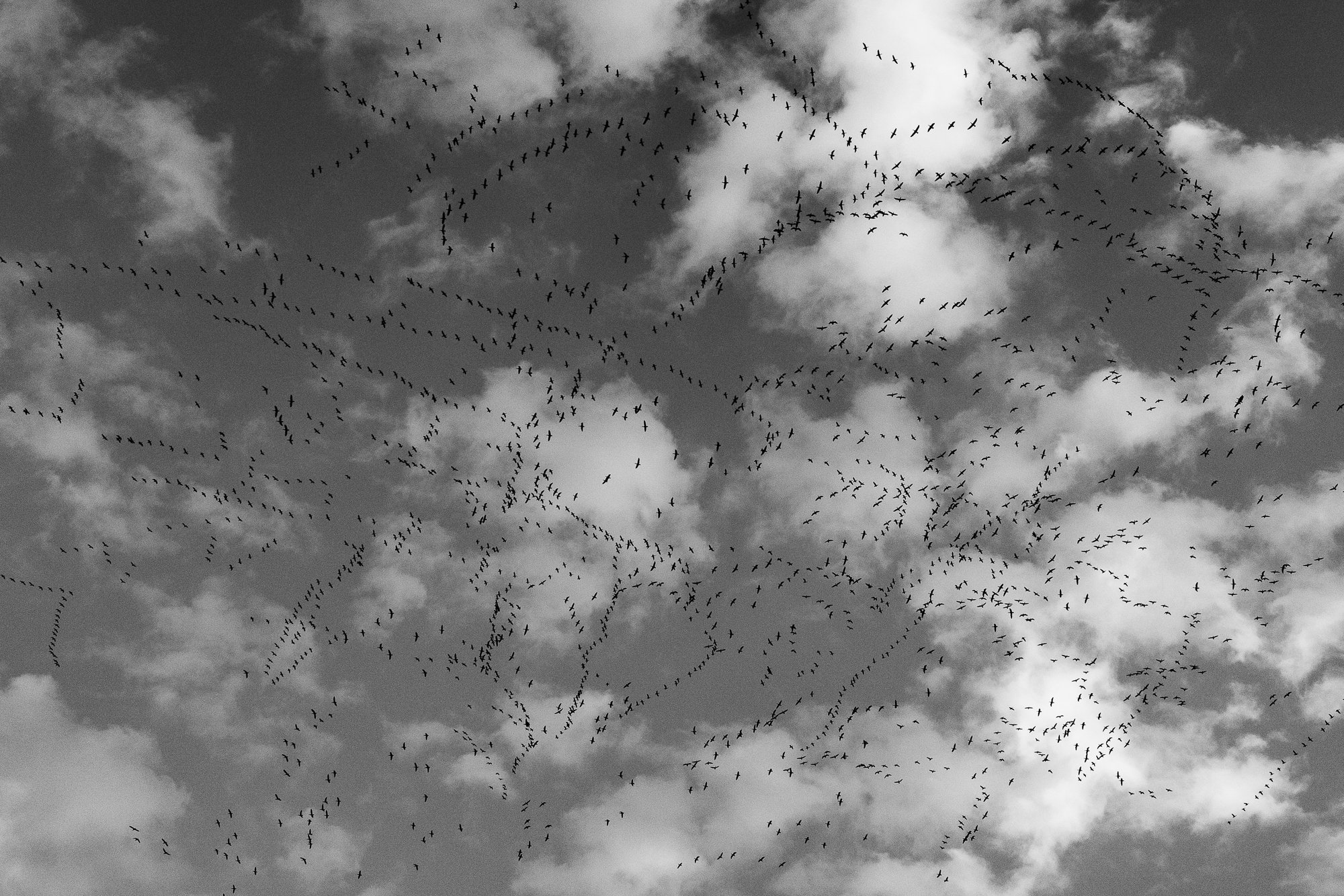
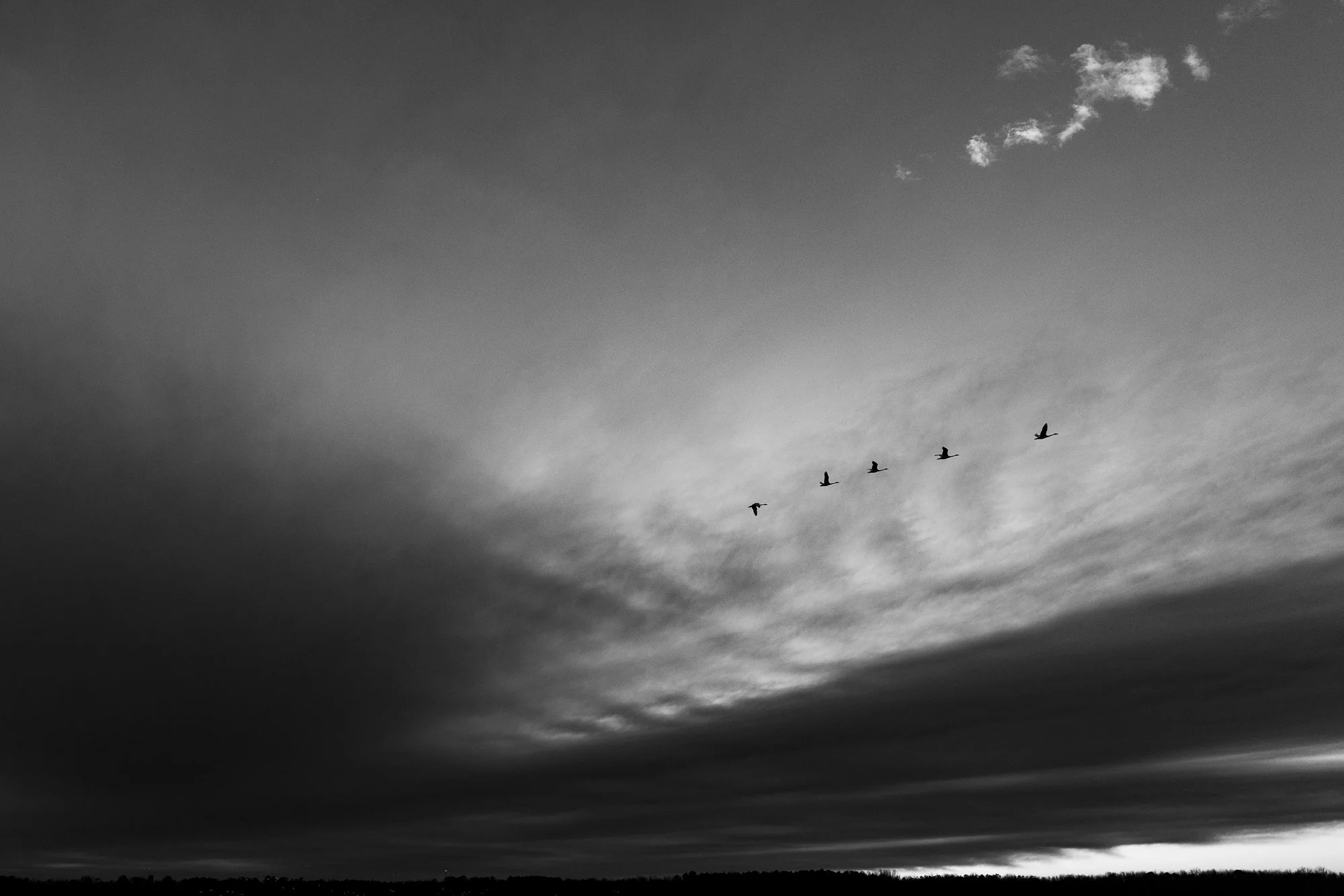
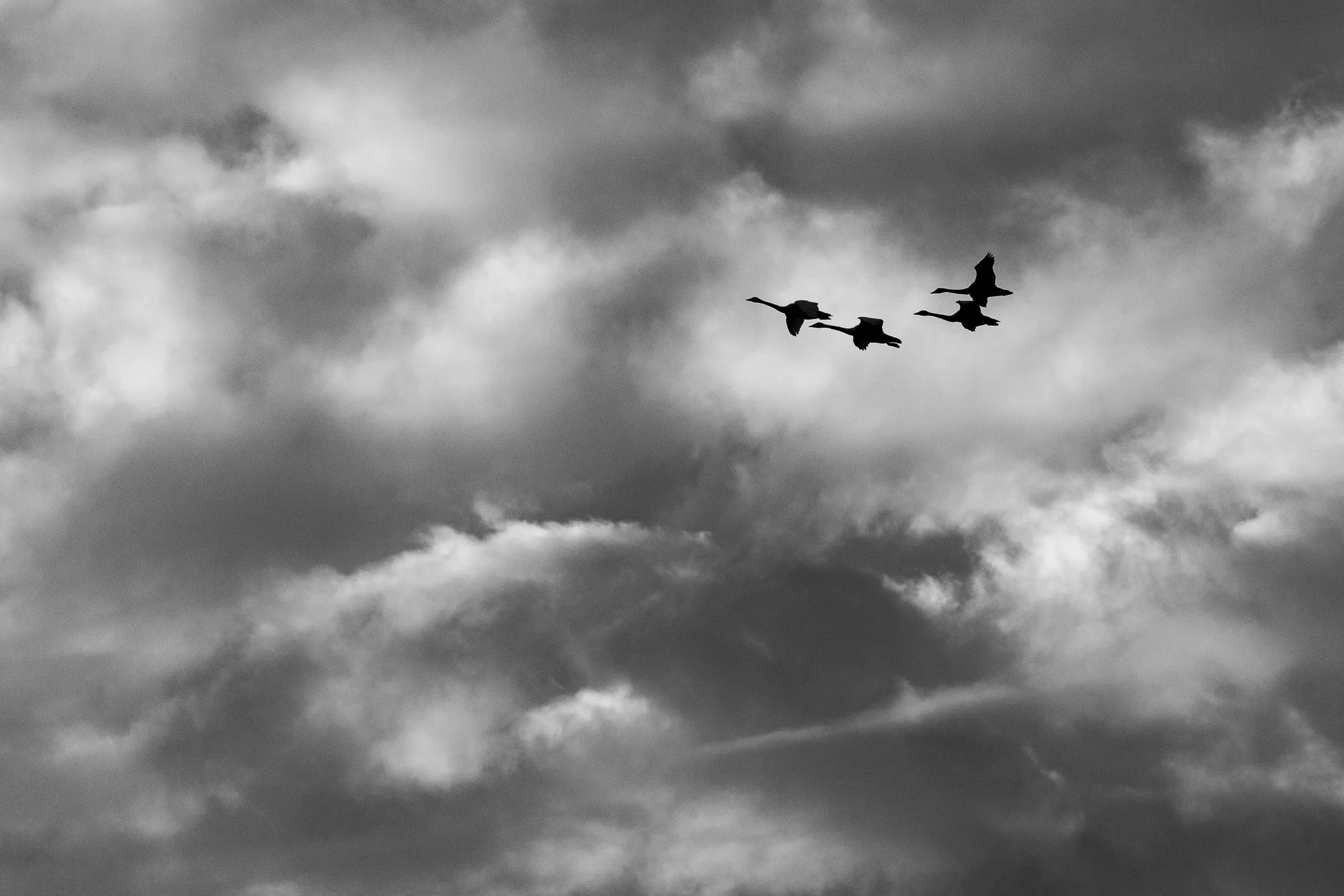
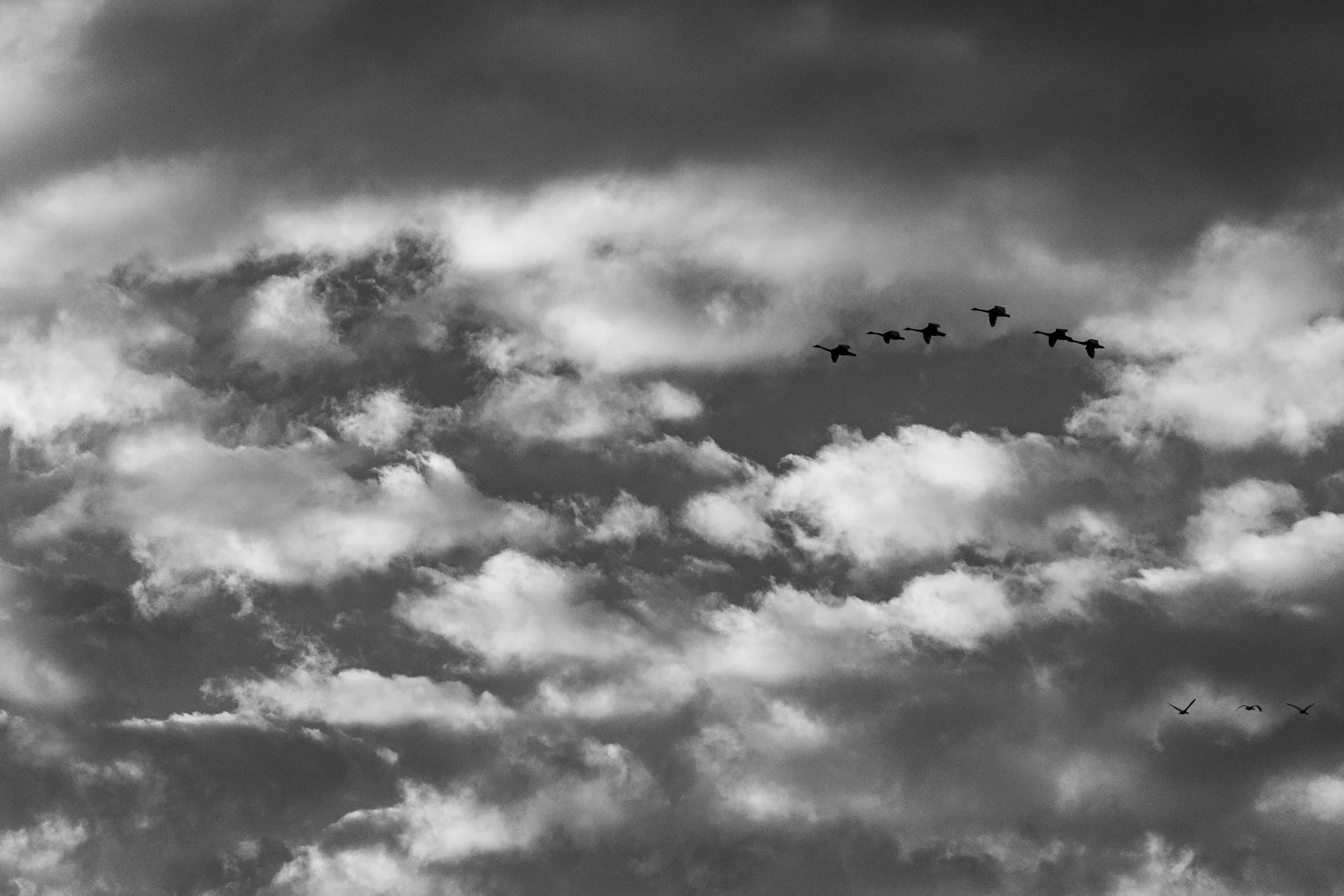
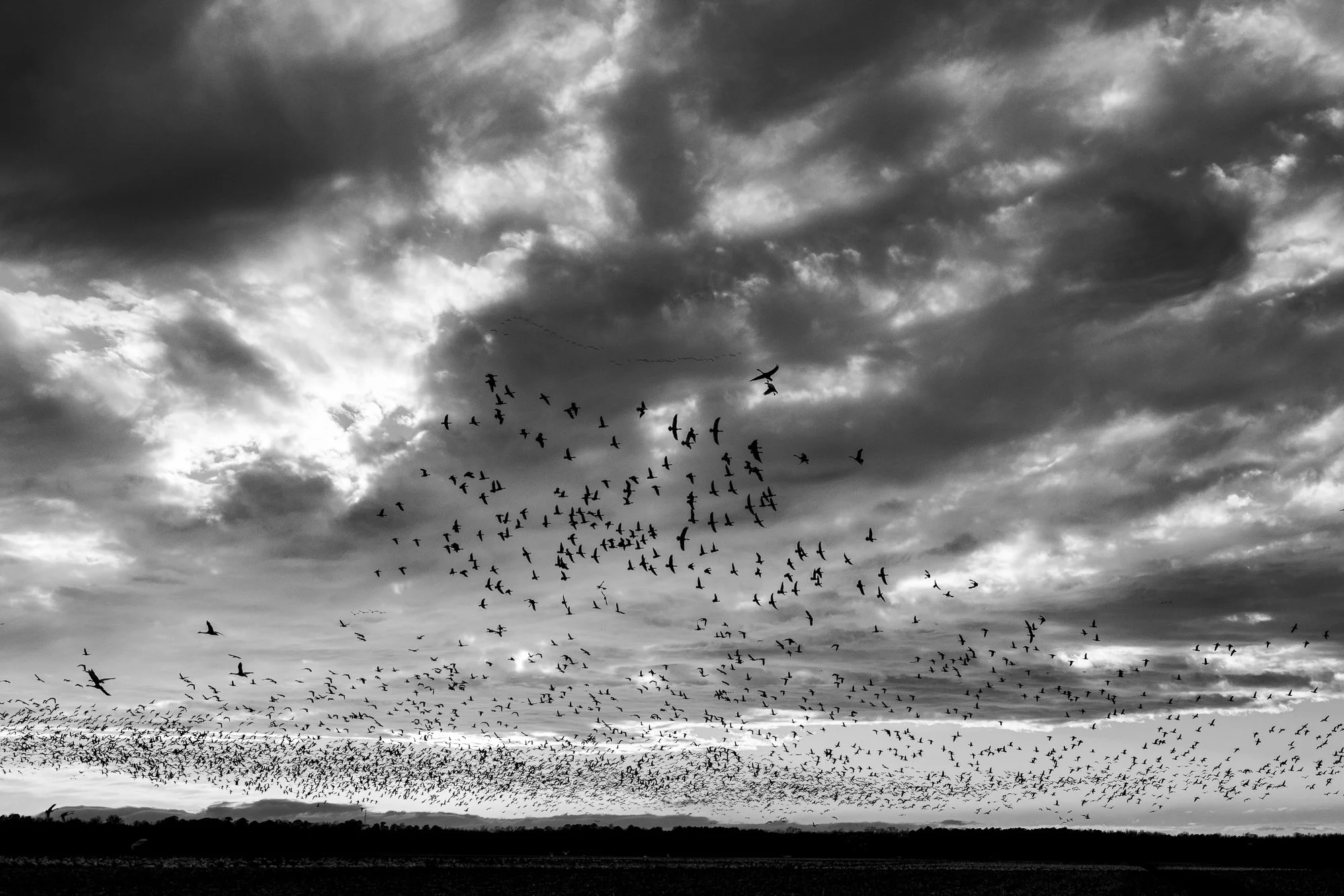
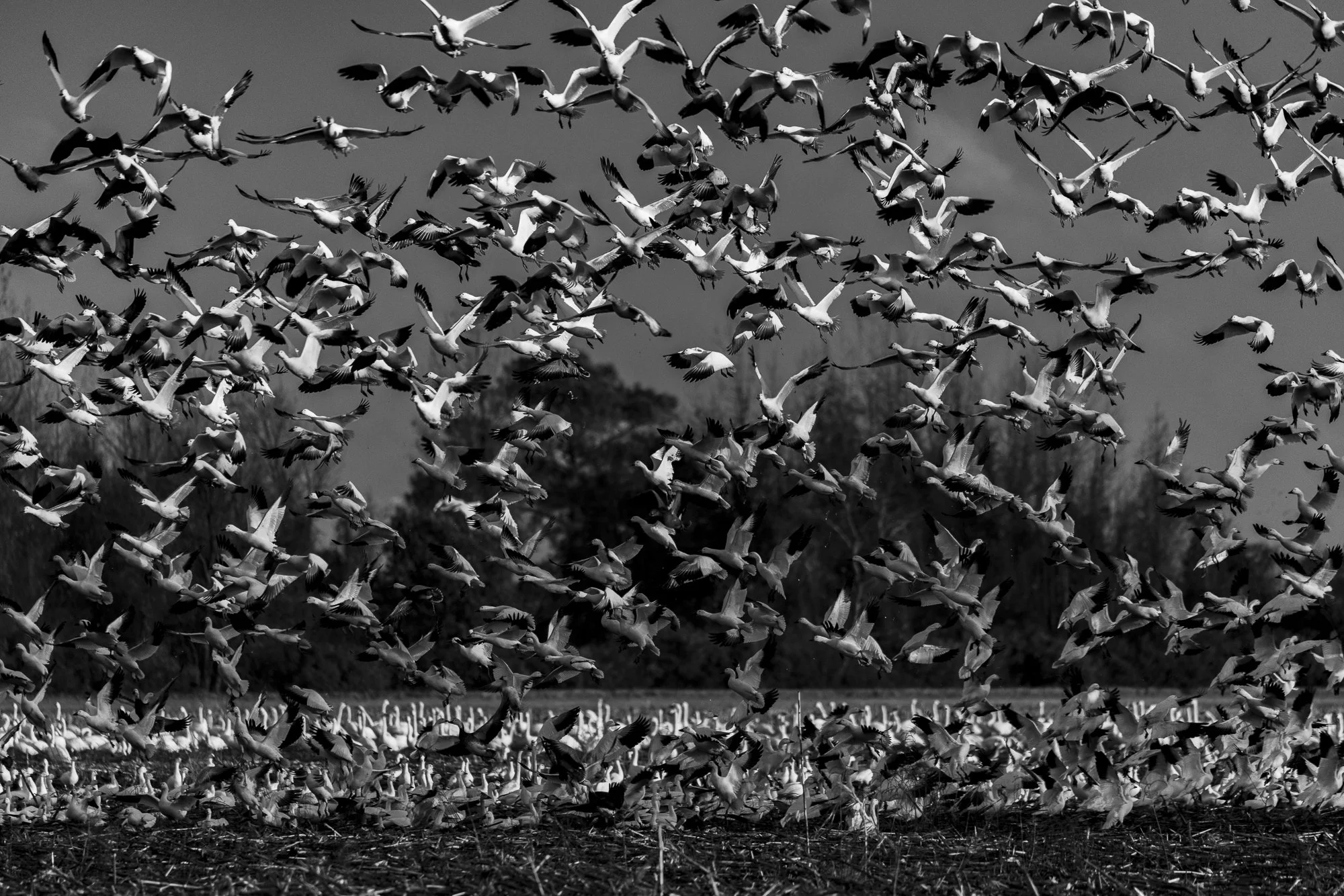
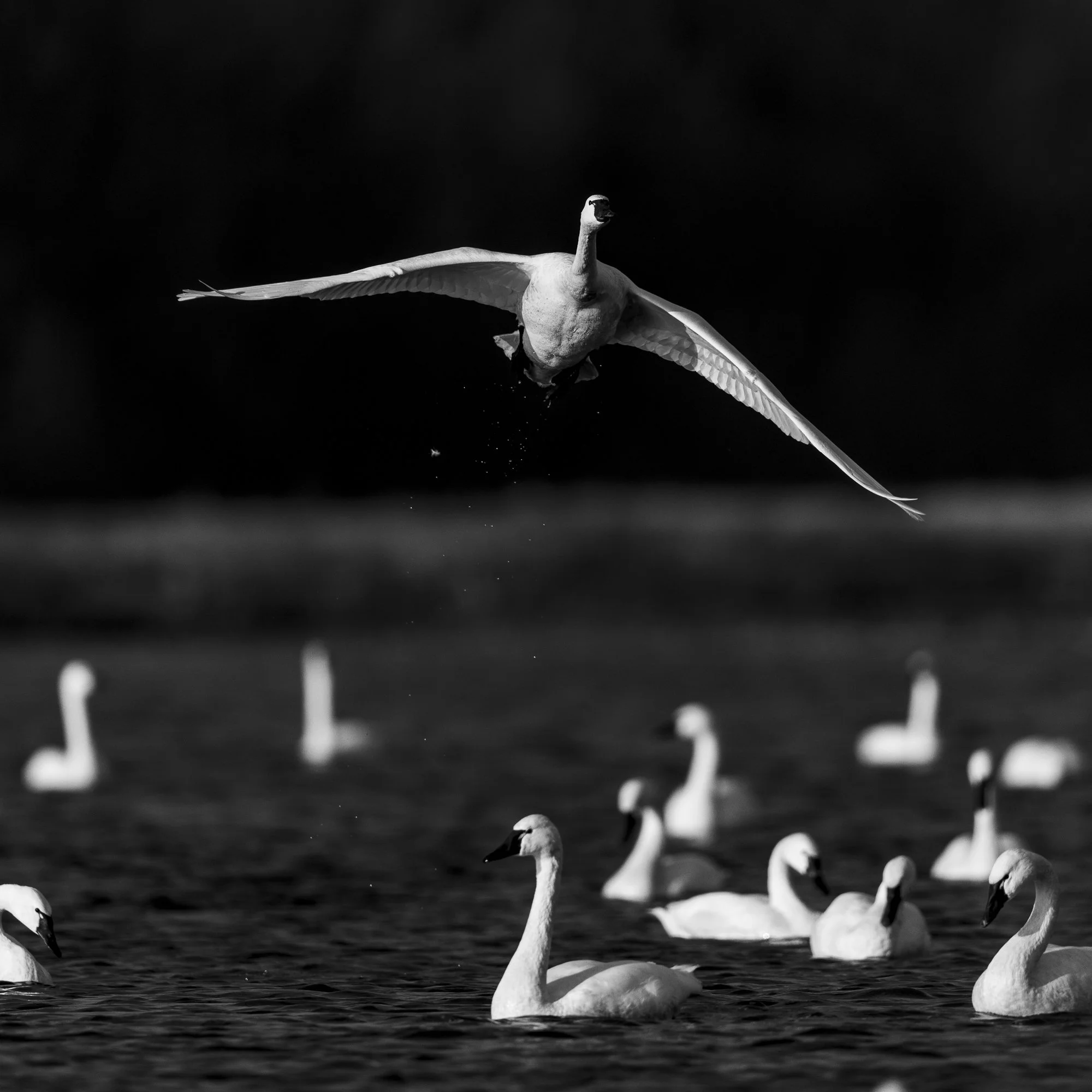
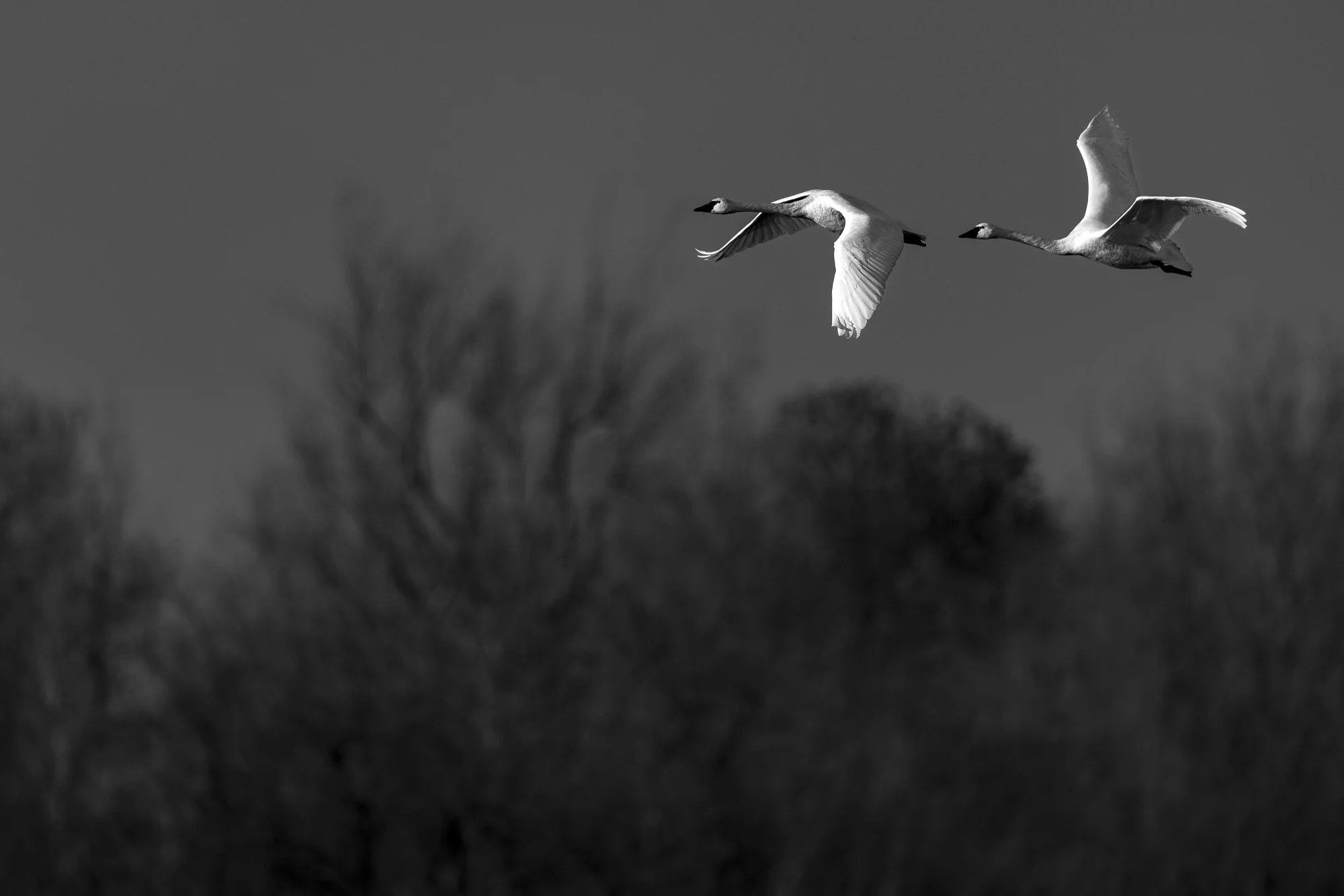
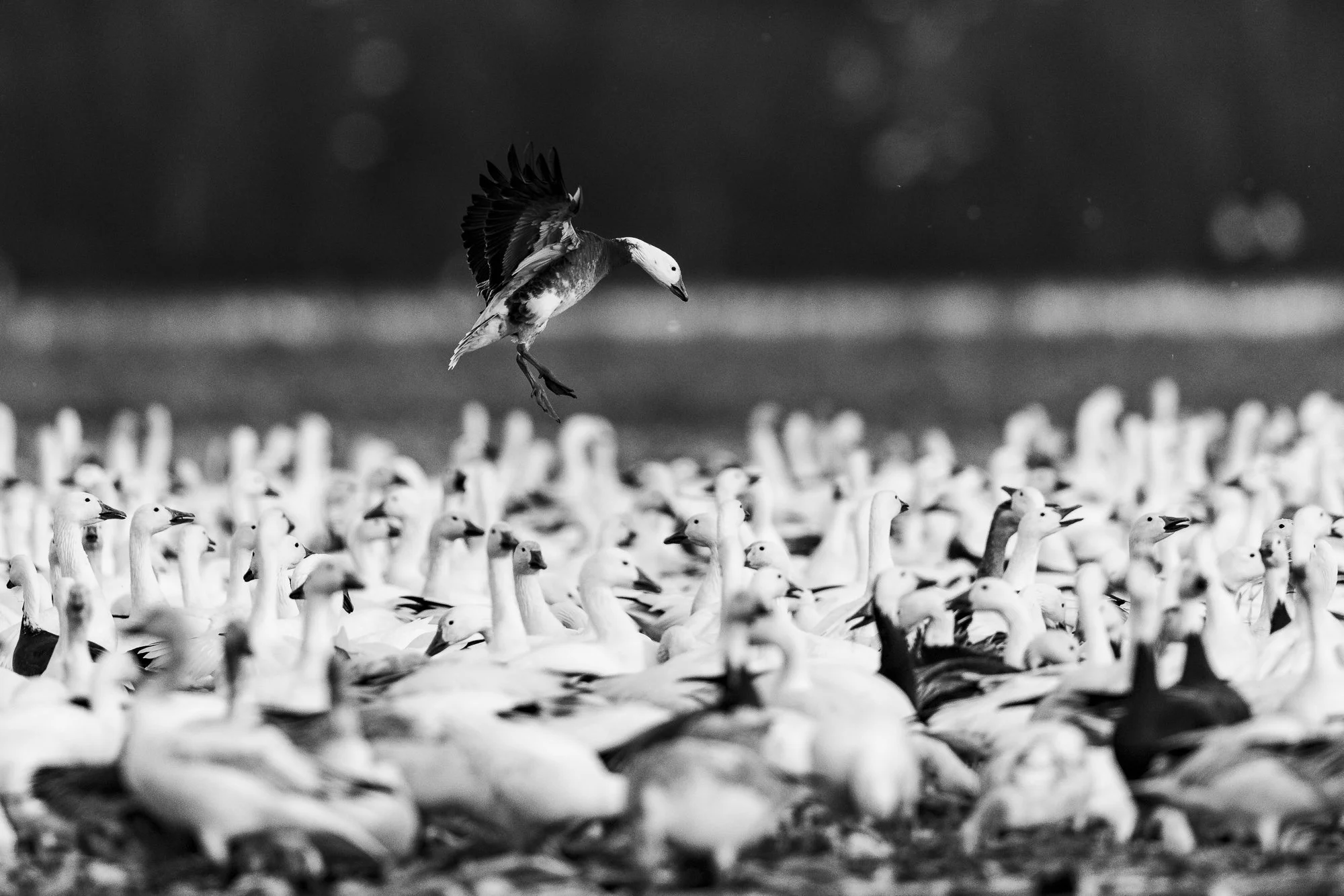
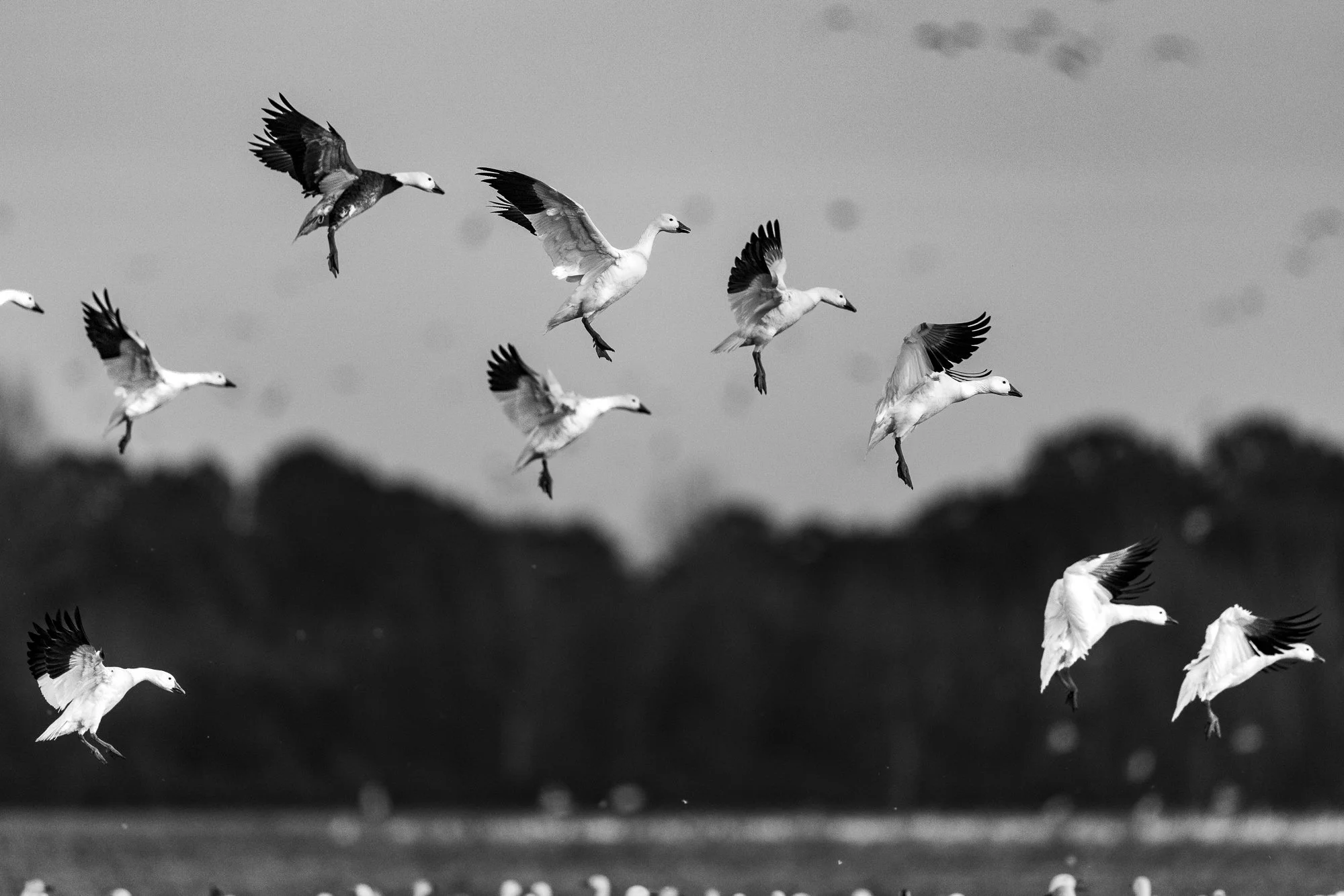
They are ideal subjects because they naturally separate from darker environments like water, trees, marsh grass and stormy skies. I’m constantly searching for one of two scenarios:
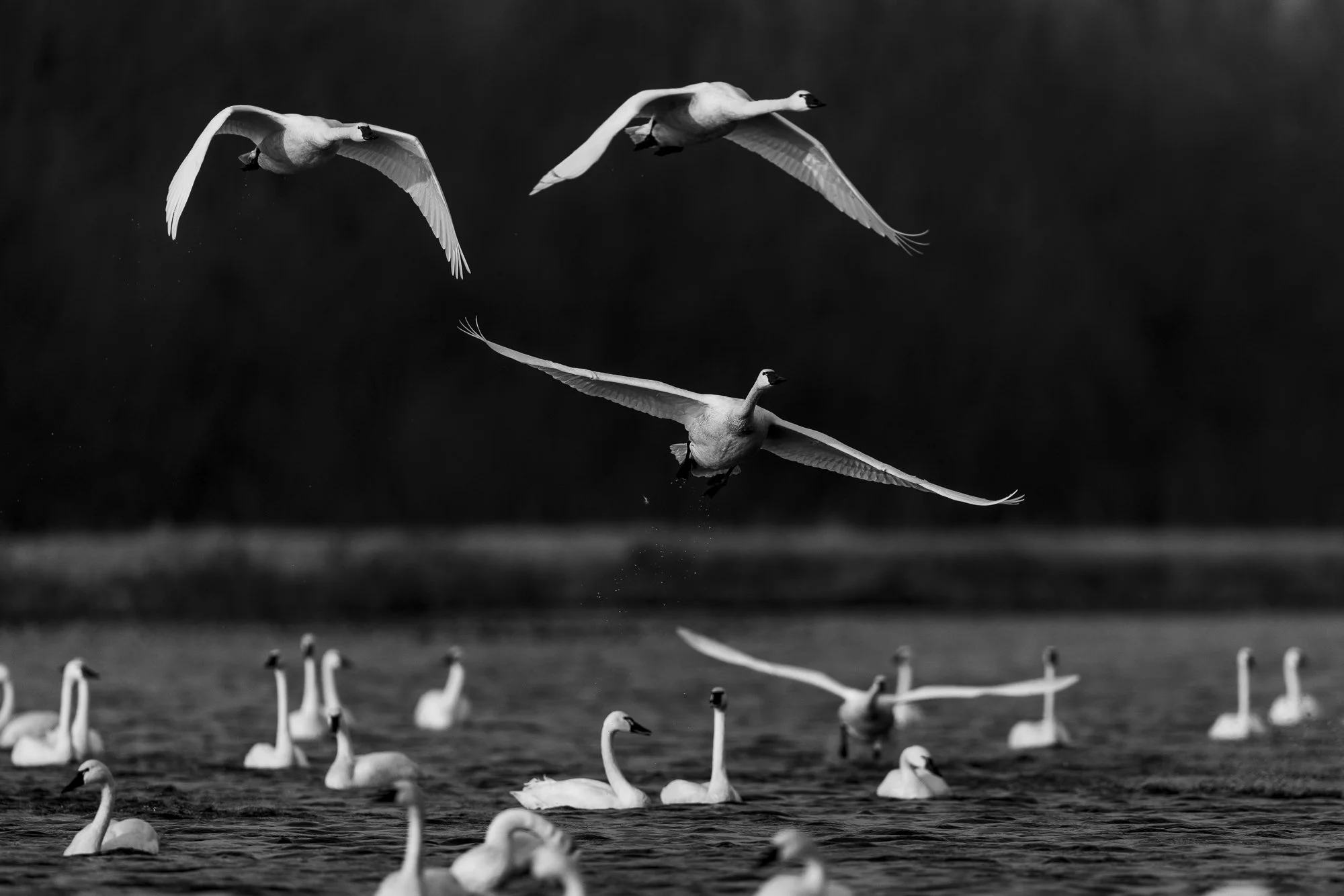
A light subject against a darker background
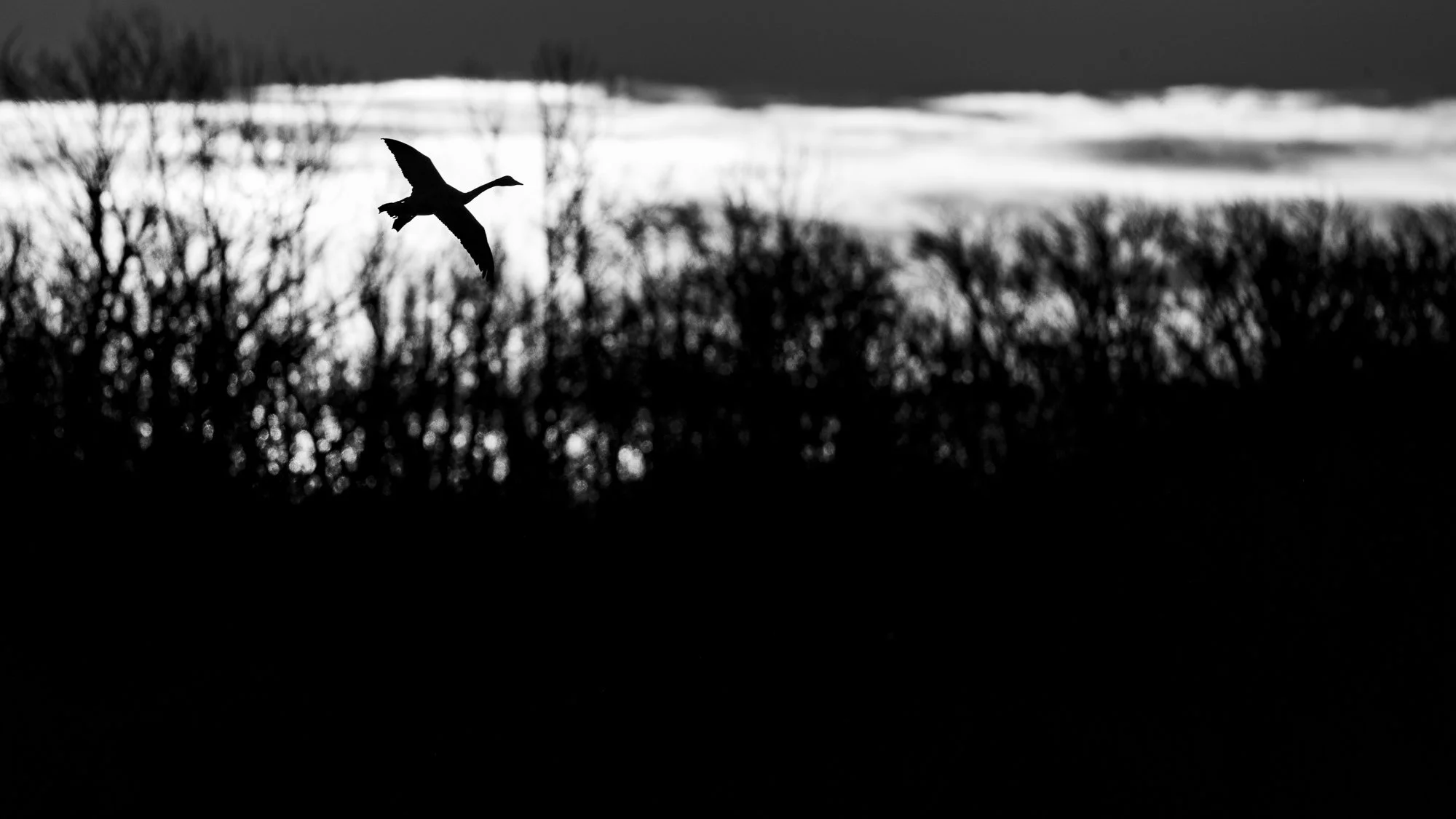
A dark subject against a lighter background
With white birds, the first option is usually the goal. If the background isn’t darker than the bird, black & white will struggle unless you are creating silhouettes.
This mindset simplifies decision-making in the field. If the contrast isn’t there, I know the image won’t translate the way I want it to in black & white.
Background Is Everything
In black & white photography, the background carries as much weight as the subject—sometimes more.
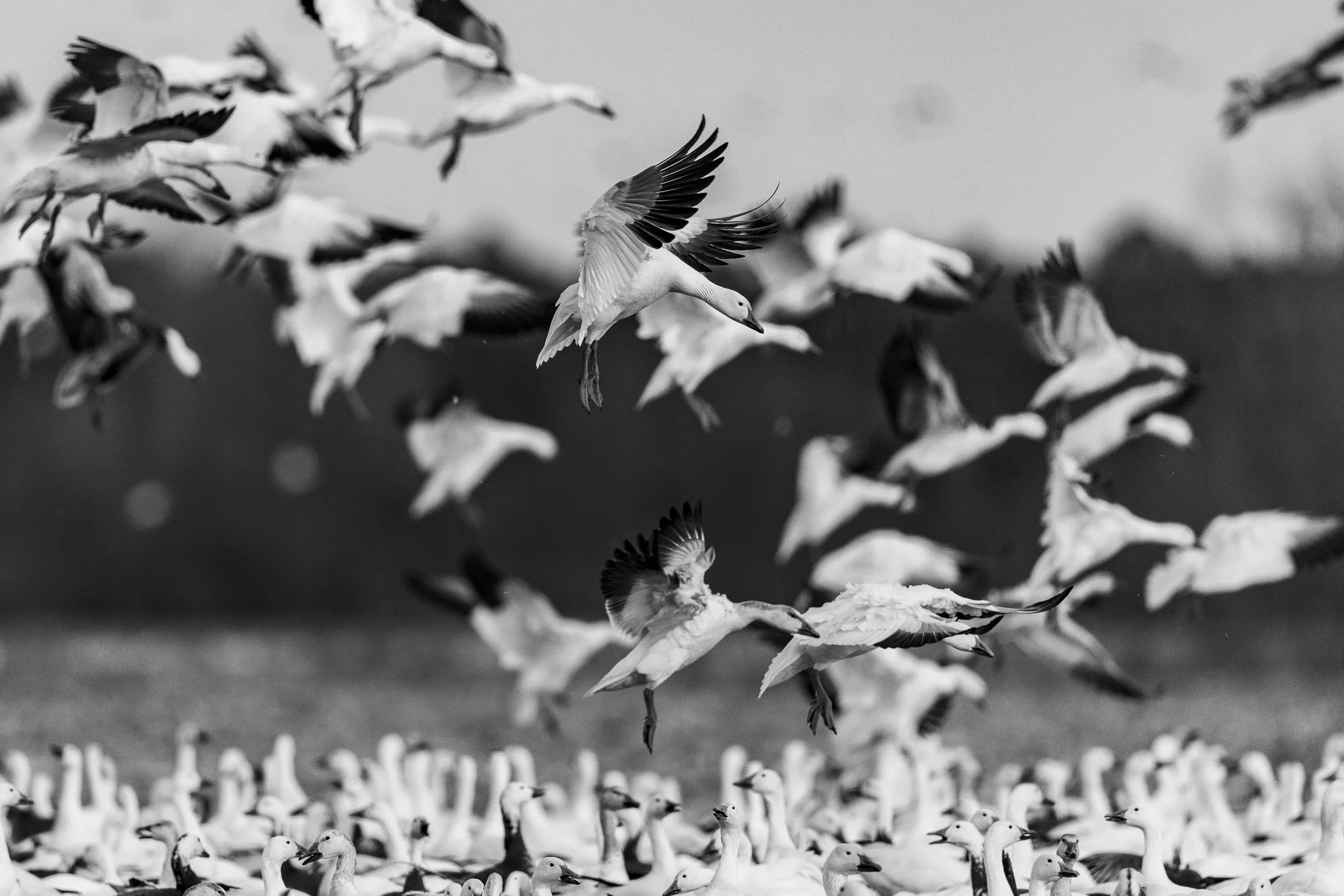
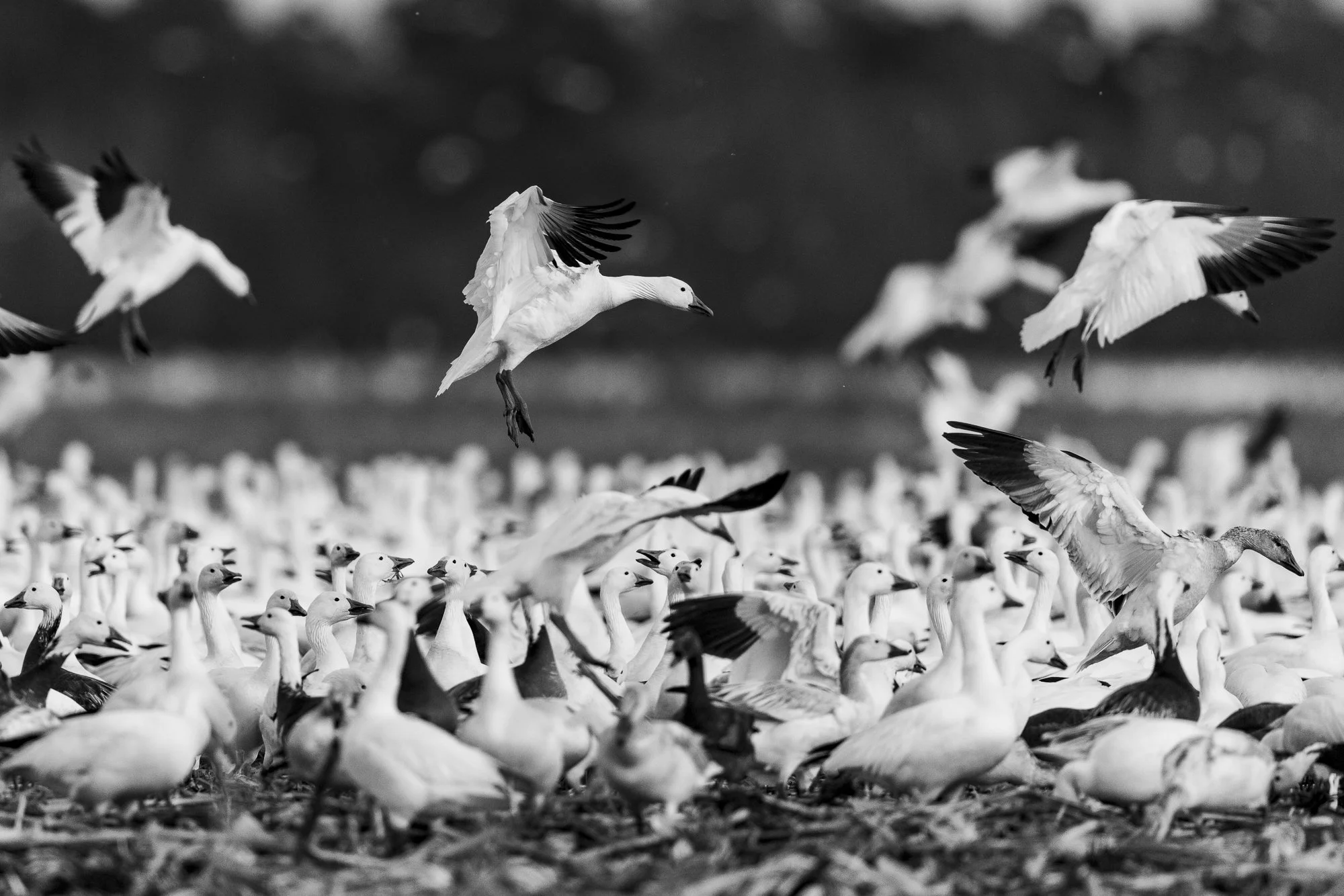
Busy, mid-tone backgrounds are the enemy of white birds in B&W. They cause edges to disappear and flatten the frame. I’m always paying attention to what sits behind the bird:
Dark tree lines
Shadowed shorelines
Storm clouds
Deep, textured water
A clean, darker background allows the bird to separate naturally, creating shape and depth without needing heavy post-processing.
If the background doesn’t help the subject, I wait. Birds often move through scenes quickly, and patience usually rewards you with a better alignment.
Exposing for White Feathers
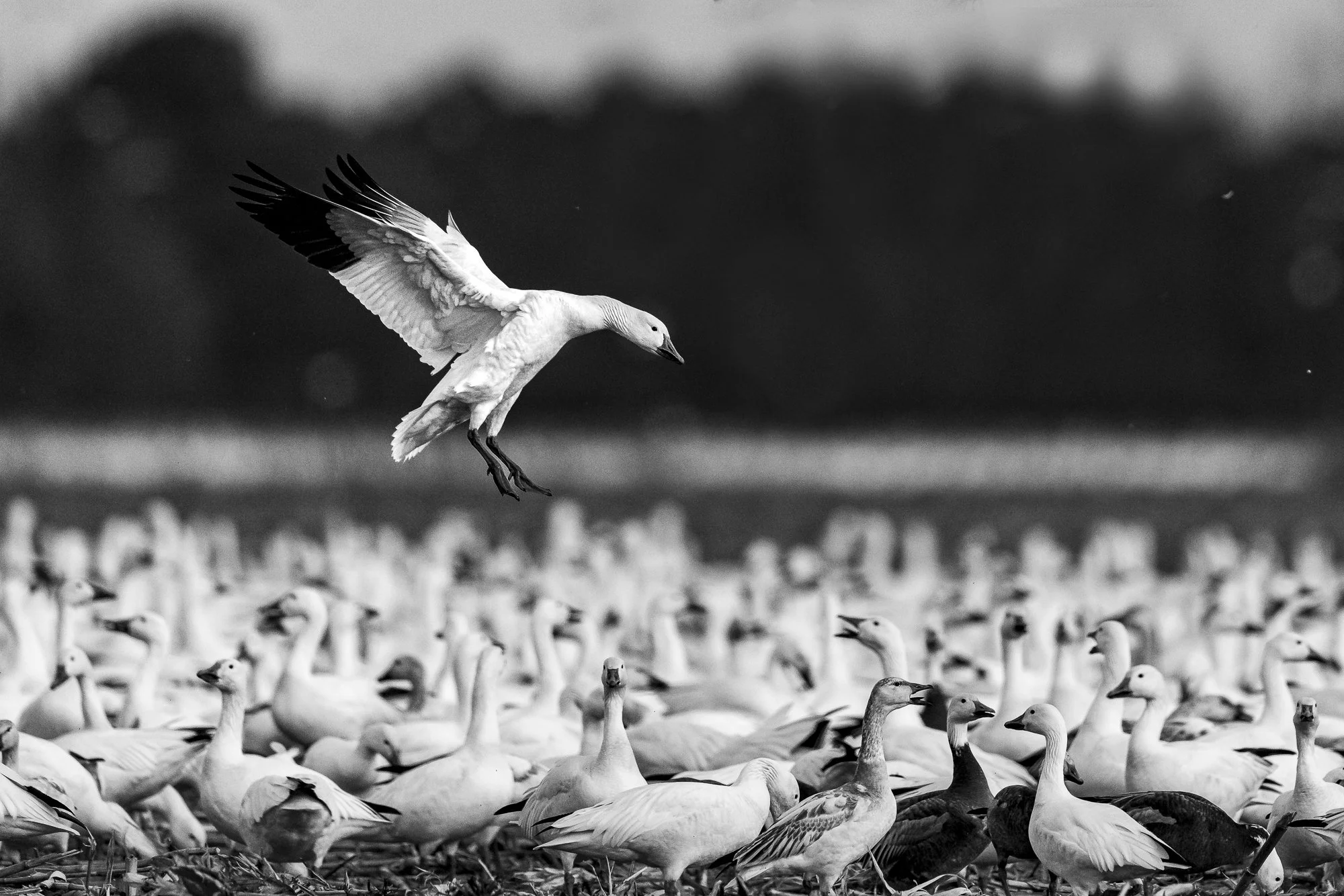
One of the biggest mistakes with white birds is blown highlights. In black & white, lost detail in the feathers is unforgiving.
I’m always watching my highlights and erring on the side of underexposure. White feathers should retain texture—even in strong light. If they don’t, the image falls apart.
A few things I keep in mind:
Slightly underexpose to protect feather detail
Use the histogram, not the LCD, to judge exposure
Bright whites should still show separation and texture
You can always lift shadows later. You can’t recover detail that never existed.
Using Motion as a Creative Tool
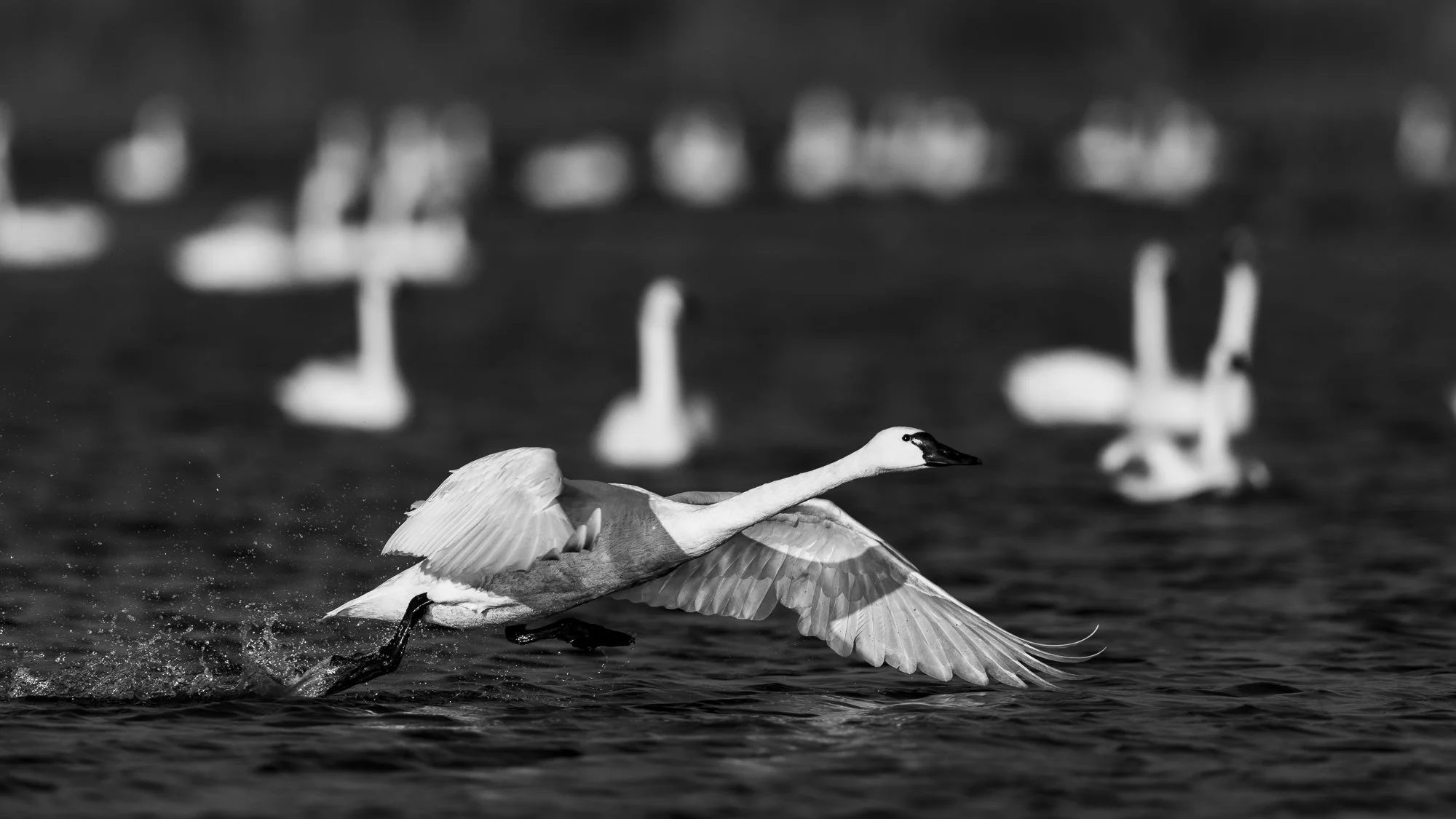
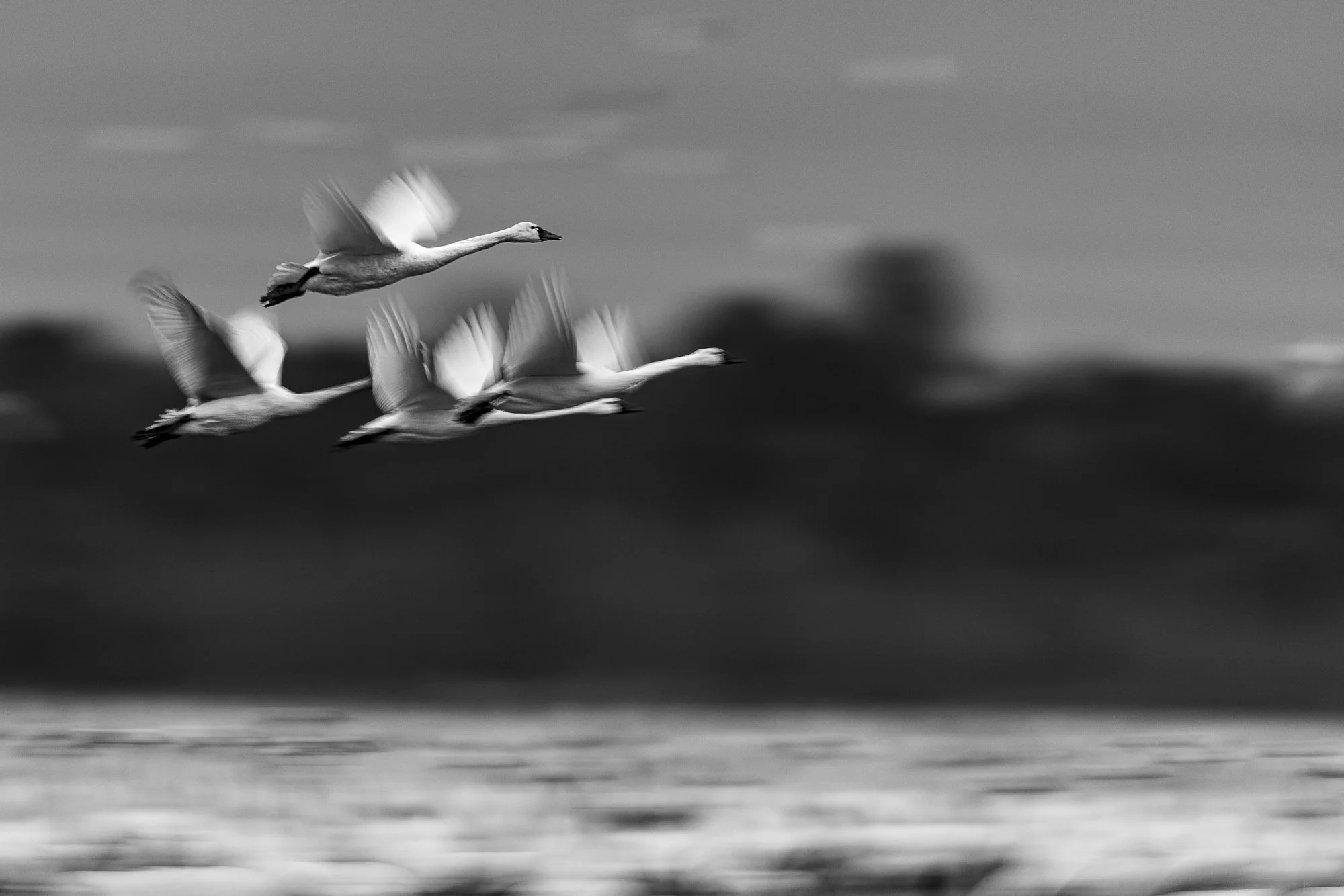
Black & white photography pairs beautifully with motion. For white birds, motion can add emotion and rhythm to an otherwise simple frame.
Slower shutter speeds can:
Turn wings into soft brushstrokes
Emphasize movement through the frame
Separate the bird from the background through blur
Motion works especially well when paired with strong contrast. The blur doesn’t confuse the eye, it guides it.
I’m not always trying to freeze perfection. Sometimes the goal is to feel the flight.
Photographing white birds in black & white has taught me to slow down and simplify. It’s less about chasing moments and more about recognizing conditions. When light, background, and subject align, black & white becomes the most honest way to tell the story. If you learn to see contrast before you see color, white birds will stop being difficult subjects—and start becoming some of the most rewarding ones you photograph.
Hope this helps and be sure to let me know your thoughts!
Cheers,
Neil.